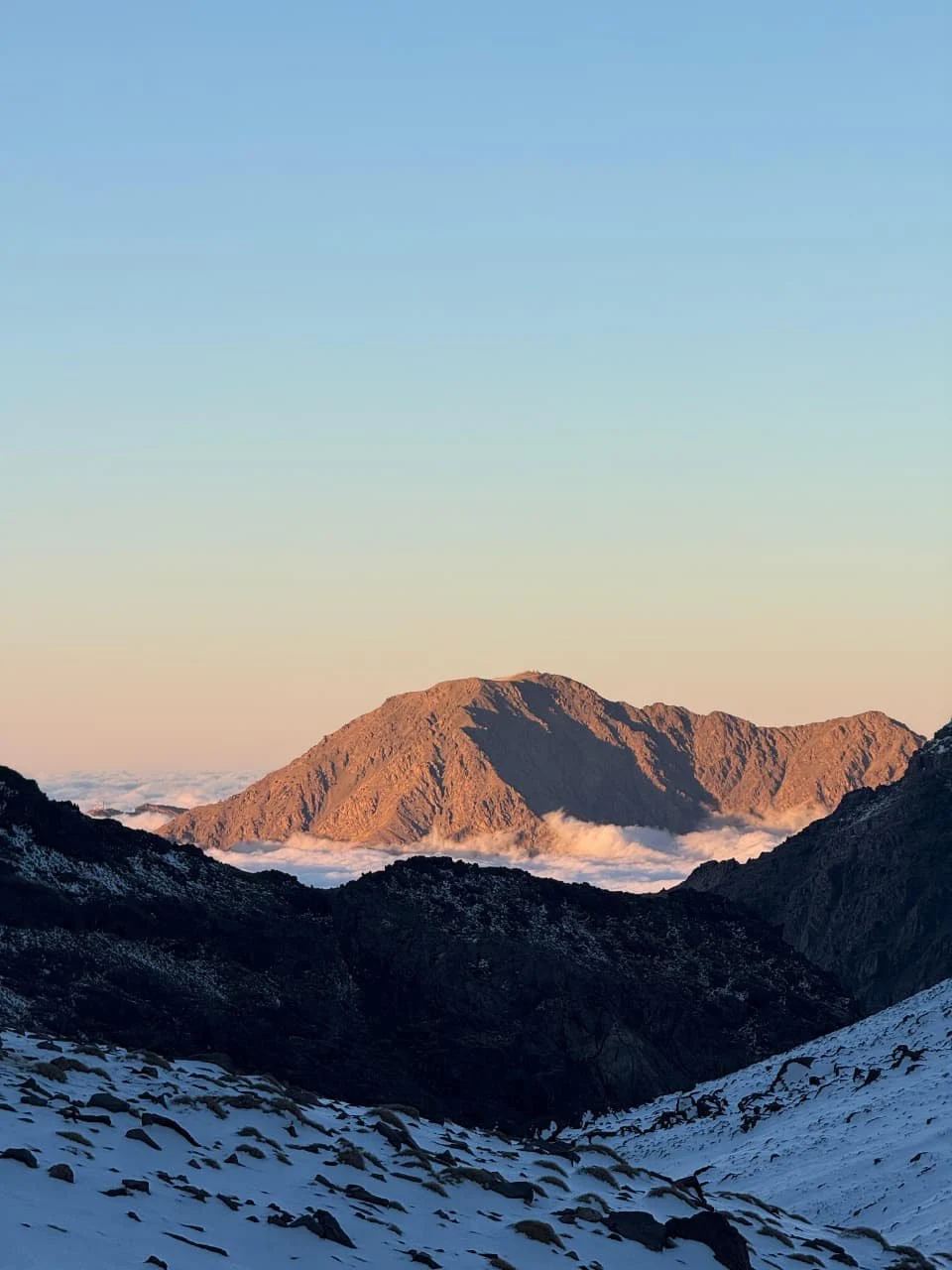

I still remember the cold air of the early morning above Imlil, the kind that wakes you up faster than a double espresso. The village was quiet, just a few mules stepping on the stone paths and a baker pulling fresh round loaves from a clay oven. I was about to start the Mount Toubkal trek 2 days, and the sky had that pale blue color that only appears before sunrise in the Atlas Mountains. A handful of trekkers were tightening their backpack straps, exchanging sleepy smiles, and checking crampons one last time. If you’ve ever wondered what it feels like to climb North Africa’s highest peak in just 48 hours, this is where the story begins.
Ready for a deeper experience? Discover our full 3-day adventure: Explore Toubkal Mount 4167m (3 Days).
1. Why This Region Captures Travelers So Deeply
The High Atlas isn’t just a mountain range it’s a world of its own. Peaks rising above 4,000 meters, Amazigh villages built from stone and clay, shepherds leading goats along impossibly narrow ridges, and paths that zigzag through valleys shaped by centuries of snowmelt.
What makes this area so special?
-
Geography with personality. The jagged slopes of Jebel Toubkal don’t hide behind forests or clouds; they stand proudly in the open, letting you see every ridge and trail leading upwards.
-
Amazigh culture at its purest. Hospitality in these mountains is not a tourism slogan. It’s a way of life. I’ve often had strangers pour me mint tea without asking for anything in return.
-
Authenticity. There are no souvenir shops on the upper trail, no cafés halfway up the ascent. The mountain gives you the essentials: silence, raw landscapes, and an honest sense of challenge.
Whether you’re coming for the climb mount toubkal experience or to seek a deeper cultural connection, the journey offers both in equal measure.
2. Overview of the Mount Toubkal Trek 2 Days (Step-by-Step)
The mount toubkal trek 2 days itinerary is intense but achievable for many hikers with good conditioning. It compresses the classic 3-day route into a tighter schedule, making every hour count.
Here’s how it unfolds, step by step.
Day 1: Imlil (1,740 m) → Refuge (3,207 m)
Approx. 5–6 hours of hiking
You start in Imlil, the beating heart of trekking in Morocco. The trail warms up quickly with a gentle ascent through terraces of walnut and cherry trees. After the village of Aroumd, the terrain shifts into a stony valley carved by glacial water.
Along the way:
-
You’ll pass Sidi Chamharouch, a small shrine perched beside a white rock a spiritual stop for locals and a short rest point for trekkers.
-
The path narrows and the air cools as you get closer to the Toubkal refuges (Refuge du Toubkal or Refuge Les Mouflons).
Most trekkers arrive late afternoon, often greeted by that unmistakable smell of mountain soup being prepared inside. The refuge vibe is unique: boots drying next to gas heaters, guides sharing weather forecasts, and people comparing their snacks like schoolkids on a field trip.
Night at the Refuge (3,207 m)
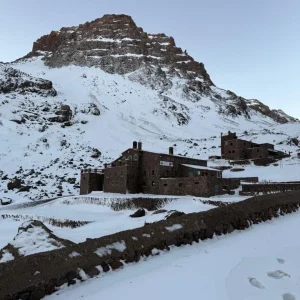
The altitude becomes noticeable here. Don’t expect luxury; expect reliability:
-
Shared dorms
-
Simple blankets (always bring your own liner)
-
Hot meals
-
Strong winds outside but warm conversation inside
If you step out after dinner, you’ll see one of the clearest night skies in Morocco a million stars reflecting off the snow peaks.
Day 2: Refuge → Toubkal Summit (4,167 m) → Return to Imlil
This is the heart of the mount toubkal trek 2 days adventure. Most start between 4:00 and 5:00 AM, headlamps cutting through the dark, boots crunching on frozen ground. The first hour is steep. Really steep. Expect switchbacks, loose stones, and the occasional cold gust that makes you tighten your jacket.
As the sun rises, the landscape slowly changes:
-
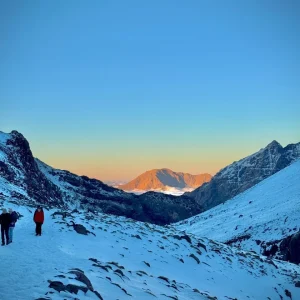
The first light hits the ridge above you.
-
Shadows stretch across the valley below.
-
The summit triangle becomes clearer with each step.
The final push to the Mount Toubkal summit is rocky but rewarding. After about 3–4 hours, you reach the iconic metal pyramid at 4,167 meters the highest point in North Africa.
From up there, you can see:
-
The Anti-Atlas stretching to the south
-
The Haouz plains disappearing into the horizon
-
If it’s clear, even the dunes near the Sahara
The descent back to the refuge is faster and warmer. After a short break and some tea, you continue all the way to Imlil, where tired legs meet pure relief.
Want a slower, more comfortable ascent? Check our 3-day itinerary: Explore Toubkal Mount 4167m (3 Days).
3. 5 Astuces Puissantes from Local Amazigh Guides
Years of guiding trekkers on the jebel toubkal trek have given local Amazigh guides a sixth sense about the mountain. Here are the tips they repeat the most the ones that genuinely matter:
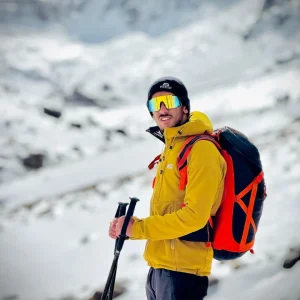
1. Start Slow, Even If You Feel Strong
One guide once told me, “Everyone is a hero for the first hour.”
He’s right. Many hikers burn through energy early on. The trail will punish that later. A steady, deliberate pace is the secret.
2. Drink More Water Than You Think You Need
Altitude dries you faster than heat. Most visitors underestimate this, especially in winter. Aim to drink frequently, even when you’re not thirsty.
3. Wear Layers, Not Heavy Clothes
The temperature difference between Imlil and the summit can reach 20°C or more.
Layering helps you adapt quickly: t-shirt → mid-layer → softshell → down jacket.
4. Respect the Wind
The summit ridge of Jebel Toubkal Morocco is exposed. Gusts can surprise even experienced hikers. A windproof jacket is not optional it’s essential.
5. The Summit Is Optional, Safety Is Not
Amazigh guides are proud people, but they’ll never push for the summit at all costs. Weather changes fast; turning back is sometimes the smartest decision.
4. Best Time to Do the Mount Toubkal Trek 2 Days
You can climb this mountain almost year-round, but conditions differ dramatically.
April–June & September–November (Best Periods)
-
Stable weather
-
Clear trails
-
Mild temperatures
-
More comfortable summit push
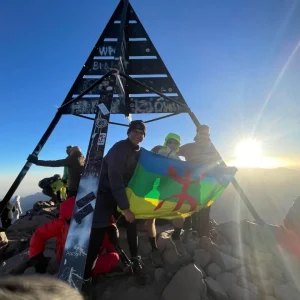
Winter (December–March)
-
Snow and ice
-
Requires crampons, ice axe, and proper winter gear
-
Absolutely needs a certified guide
Winter brings extraordinary beauty bright snowfields, silence, sharp ridgelines but it is also more demanding.
Summer (July–August)
-
Hot lower valleys
-
Clear but dry air
-
Hydration is critical
If you’re sensitive to heat, avoid July and August.
5. Fitness Level Required (Honest and Precise)
The mount toubkal trek 2 days is not a walk in the park. It’s short, intense, and covers a large elevation gain in a limited time frame.
You should be able to:
-
Hike 6 hours with a backpack
-
Handle steep terrain
-
Manage altitude discomfort
-
Stay stable on rocky surfaces
Technical climbing is not required, but stamina and mental endurance are key. If you can comfortably complete long hikes (15–20 km) at home, you’ll likely adapt well.
6. What to Pack (Practical Checklist)
Here’s a realistic list based on actual needs not a travel-shop upsell:
Clothing
-
Base layers (synthetic or wool)
-
Fleece or mid-layer
-
Down jacket
-
Waterproof/windproof shell
-
Trekking pants
-
Warm hat + gloves (even in spring)
-
Sunglasses with UV protection
Gear
-
Backpack 25–30L
-
Headlamp (mandatory for summit day)
-
Trekking poles (highly recommended)
-
Refillable water bottles or hydration bladder
-
Light sleeping bag liner
-
Snacks for quick energy
Footwear
-
Sturdy hiking boots with ankle support
-
Good wool socks
-
Optional: gaiters (helpful in snow)
Miscellaneous
-
Sunscreen (high SPF)
-
Personal medications
-
Quick-dry towel
-
Hand warmers in winter
7. Approximate Costs (Realistic Ranges, Not Exact Rates)
While prices vary by season, guide experience, and group size, here’s what travelers usually encounter:
-
Guided trek (2 days): mid-range cost
-
Refuge night: modest and standardized
-
Equipment rental (crampons, poles, boots): low to mid-range
-
Meals: often included with guide services
Compared to many alpine destinations, the morocco toubkal trek is accessible and budget-friendly, especially given the level of support.
8. FAQ – Quick Answers for Travelers
1. Do I need a guide for the Mount Toubkal trek 2 days?
Guides are strongly recommended year-round and absolutely essential in winter. The terrain and weather can change fast.
2. Can beginners climb Mount Toubkal?
Beginners with good fitness and determination can succeed. Total beginners with no hiking experience should consider a 3-day version.
3. How cold does it get at the summit?
In winter: –10°C to –20°C with wind.
In summer: 0°C to 10°C early morning.
4. Are crampons needed?
In winter, yes. In other seasons, it depends on recent conditions guides will confirm.
5. Is altitude sickness common?
Some hikers feel headaches or fatigue near the refuge. Hydration and pacing are key.
Conclusion – Ready to Start Your Mount Toubkal Trek 2 Days Adventure?
The mount toubkal trek 2 days is a blend of raw beauty, cultural richness, and personal challenge. You’ll traverse valleys shaped by glaciers, share mint tea with Amazigh guides, and stand on a summit that feels almost unreal in the early morning light. Whether your goal is to push your limits, disconnect from routine, or simply experience the soul of Jebel Toubkal Morocco, this 48-hour adventure delivers something memorable.
If you’re ready to take the next step plan your dates, ask questions, or connect with a local guide feel free to reach out and start preparing your climb. Your journey to North Africa’s highest peak begins long before your boots touch the trail.
0 Comment