

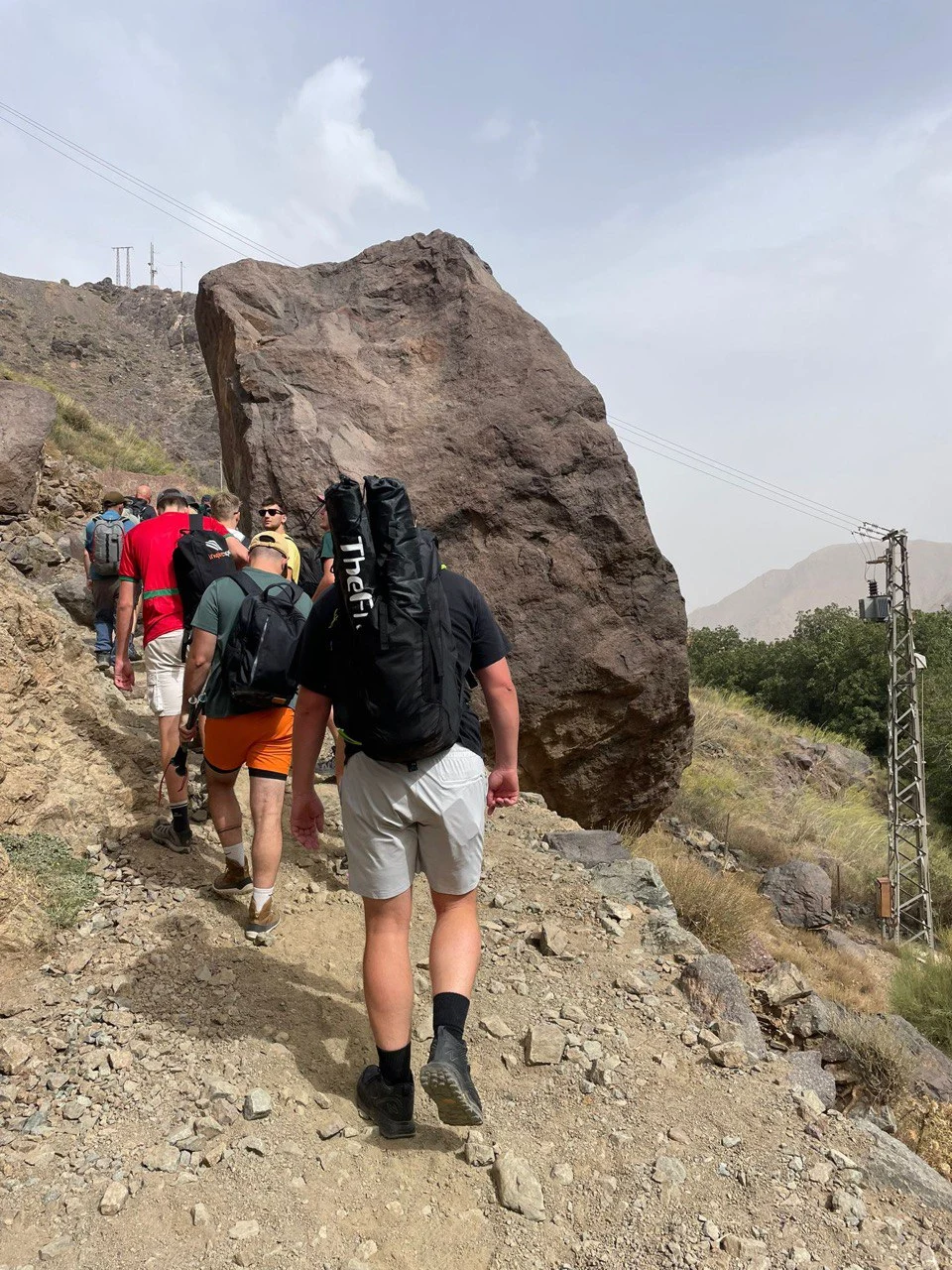

Seen from Imlil, Mount Toubkal looks close enough to touch: terraces, walnut trees and stone houses rising toward a wide, blunt summit. On the trail, the scale becomes clearer. A mount toubkal 2 day trek means more than 2,400 m of ascent, one short night at the refuge, and two long, steady days on your feet.
This guide focuses on what hikers and guides actually see and discuss: difficulty, timing, seasons, gear and realistic expectations for a compact Toubkal itinerary.
If you’re planning a fast ascent, you might appreciate looking at a structured 3-day option such as the Explore Toubkal Mount 4167m (3 Days), which many trekkers use for extra acclimatisation.
Quick Overview for 2-Day Trekkers
A mount toubkal 2 day trek is the fast, efficient option: Imlil to refuge on day one, then summit and full descent on day two. It’s simple on paper, but demanding in practice.
Key facts
-
Region: High Atlas, Mount Toubkal Morocco
-
Summit altitude: 4,167 m (highest in North Africa)
-
Start point: Imlil (≈ 1,740 m)
-
Distance: roughly 22–28 km over 2 days
-
Elevation gain: ≈ 2,400 m
-
Timing:
-
Day 1: 4–6 h to the refuge
-
Day 2: 8–10 h summit + descent
-
-
Best for: hikers already used to long mountain days
Micro-summary:
Think of the 2 day Toubkal climb as a concentrated effort: straightforward logistics, one night at altitude, and two full, physically honest hiking days.
What Travelers Actually Want to Know
Most questions about a Mount Toubkal 2 day trek are practical, not romantic: “How hard is it really?” “Is two days enough?” “What about altitude and weather?”
-
Expect a long uphill rather than a technical climb.
-
The path is rocky and uneven, especially higher up.
-
Altitude is the game changer; above 3,500 m, every step feels heavier.
Is two days enough?
-
Works well if:
-
You have decent fitness and some hiking experience.
-
You’re okay with early starts and long days.
-
-
Consider a slower Toubkal itinerary if you’re new to mountains or worried about altitude.
Weather, timing and trouble spots
-
Spring and autumn usually balance cool air and decent stability.
-
Summer brings heat in Imlil but comfortable summit temperatures.
-
Winter turns the route into an alpine outing with snow and ice.
-
People often struggle on the long slope above Sidi Chamharouch and on the final, loose section before the summit ridge.
Safety essentials
-
In summer, the route is non-technical but still serious: altitude, fatigue and weather matter.
-
In winter, crampons, axe and experience (or a qualified guide) are often necessary.
-
Turning back in strong wind, poor visibility or with persistent symptoms is normal, not a failure.
Micro-summary:
Two days are enough for a prepared hiker, but the mix of thin air, long hours and changing conditions makes this more than a casual walk.
Day-by-Day Breakdown (Neutral, Informational Style)
Day 1 – Imlil to Refuge
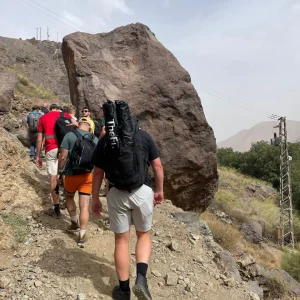
From Imlil, the path climbs through orchards and terraces before entering a stony valley dotted with small Amazigh (Berber) hamlets. The shrine at Sidi Chamharouch breaks the day in half; above it, the landscape becomes more obviously alpine.
Terrain and pace
-
Lower section: track and mule paths, gentle to moderate angle.
-
Upper section: rockier trail, zigzags, looser underfoot.
-
Guides generally keep a steady, conservative pace to help with acclimatisation.
Where people slow down
-
Just after Sidi Chamharouch, the combination of sun, altitude and continuous uphill catches many hikers.
-
Mild headaches, shortness of breath and heavy legs are common first signals of altitude.
Day 1 checklist
-
▢ 1.5–2 L of water from the start
-
▢ Cap, sunglasses, high SPF
-
▢ Light layers you can adjust easily
-
▢ Trekking poles for the rougher sections
-
▢ Simple snacks: nuts, dried fruit, energy bars
Micro-summary:
Day 1 sets the tone: steady ascent, visible progress up the valley, and the first real taste of thinner air as you reach the refuge.
Day 2 – Summit Push & Descent
Summit day is the core of the Mount Toubkal 2 day trek: dark start, long ascent, brief summit plateau, and a demanding descent all the way back to Imlil.
Timing and rhythm
-
Usual refuge departure: between 3:30 and 5:00 a.m.
-
Summit reached in about 3–4 hours for most groups.
-
Quick break on top, then back to the refuge and further down to the village.
Wind, snow and turning points
-
The summit ridge is often windy; even in summer you’ll want a warm layer and windproof shell.
-
In winter and early spring, snow and ice can make the upper slopes serious; many hikers only continue with proper equipment and guidance.
-
Turnaround points are usually driven by wind, visibility, time or how the group is coping with altitude.
Day 2 checklist
-
▢ Headlamp with charged batteries
-
▢ Warm hat, gloves, insulating layers
-
▢ Windproof jacket
-
▢ Easy-access snacks and 1.5–2 L water
-
▢ Honest self-check at the refuge and mid-ascent
Micro-summary:
Day 2 is the long one: pre-dawn start, steady grind to 4,167 m, big views over the High Atlas, then hours of descent that reward patience and good preparation.
If you’re planning a fast ascent, it’s wise to speak with a local guide about current weather and trail conditions, especially outside the main summer window.
Conditions, Seasons & Mountain Realities
The High Atlas acts like a wall between the Atlantic and the Sahara, which means a 2 day Toubkal climb can feel very different in May than in February.
Seasonal overview
-
Spring: mix of snow higher up and greening valleys; conditions can flip between sunshine and sleet.
-
Summer: hot in Imlil, cooler up high; mostly dry with possibility of afternoon storms.
-
Autumn: dry, clear, popular for a Mount Toubkal 2 day trek thanks to stable conditions.
-
Winter: short days, snow and ice; effectively an alpine climb.
What good guides pay attention to
-
Fresh snow and freeze–thaw cycles on the upper slopes.
-
Wind strength on the ridge and summit.
-
Avalanche risk in winter after heavy storms.
-
Group experience and how people coped on day 1.
Micro-summary:
Season, wind and overnight freezes matter more than the date on your ticket; on Toubkal, “just two days” still means real mountain conditions.
What to Pack (Short, Useful, No Fluff)
For a mount toubkal 2 day trek, you need a focused kit, not a huge pack.
Core items
-
Sturdy, broken-in hiking boots
-
Layering system: base layer, light mid-layer, insulated jacket, waterproof shell
-
Hat, buff, light gloves (heavier gloves in cold months)
-
Trekking poles
-
2–3 L water capacity
-
Headlamp
Seasonal extras
-
Warm season: strong sun protection, electrolytes, light long sleeves.
-
Cold season: crampons and extra insulation, ideally chosen with professional advice.
Micro-summary:
Pack for flexibility and safety: a few well-chosen layers and solid footwear matter more than carrying everything you own.
Physical Preparation & Who This Trek Is For
The Mount Toubkal 2 day trek is accessible but not effortless. It suits hikers who already know what a long mountain day feels like.
Difficulty in honest terms
-
Long ascent and long descent, especially on day two.
-
Simple but uneven terrain that can punish untrained knees.
-
Altitude that amplifies tiredness and slows your pace.
Good fitness indicators
-
You can walk 5–7 hours with 800–1,000 m ascent without feeling destroyed.
-
Back-to-back long days don’t completely wipe you out.
-
You’re used to uneven trails, not only gym machines.
Who it fits best
-
Regular hillwalkers who want a non-technical big summit.
-
Trail runners and fit travellers looking for a compact objective.
-
Determined beginners who trained beforehand and accept that going slowly is fine.
Micro-summary:
Toubkal rewards solid baseline fitness and humility more than raw strength; if you can manage long days and pace yourself, two days is realistic.
Estimated Costs (Neutral, Non-Promotional)
Costs vary with season, comfort level and how independently you organise your 2 day Toubkal climb.
Typical cost elements
-
Transport between Marrakech and Imlil
-
One or two nights in Imlil guesthouses (before/after trek)
-
Refuge night with dinner and breakfast
-
Food, snacks and water on the trail
-
Optional guide and mule support
-
Optional gear rental in winter (crampons, axe, extra clothing)
Price tendencies
-
Shared transport and group services lower individual costs.
-
Private transfers and more comfortable accommodation push totals higher.
-
Winter gear rental adds a modest but noticeable extra cost.
Micro-summary:
The overall price of a Mount Toubkal 2 day trek ranges from budget-friendly shared options to more comfortable, private arrangements; you can adjust the level without changing the mountain itself.
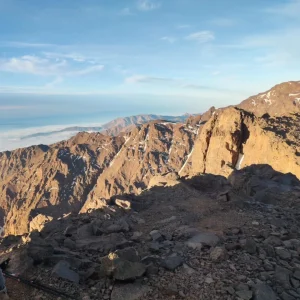
Key Takeaways
-
A Mount Toubkal 2 day trek is short in calendar time but big in effort.
-
Day 1 is a steady climb from Imlil to the refuge; Day 2 combines summit and full descent.
-
Weather, wind and snow conditions shape the experience as much as distance.
-
Focused packing and realistic fitness make the trek safer and more enjoyable.
-
Respect for local Amazigh communities and mountain conditions is part of doing Toubkal well.
-
Two days is enough for many hikers, but there’s no shame in choosing a slower Toubkal itinerary.
Before deciding on your exact dates, some hikers review slower itineraries like the Explore Toubkal Mount 4167m (3 Days) to better understand pacing and conditions across the High Atlas.
FAQ (Short, Schema-Friendly)
Is Toubkal safe in two days?
For fit, prepared hikers in suitable conditions, yes; winter or storms require extra caution.
Do I need previous altitude experience?
Not mandatory, but earlier hikes above 3,000 m help.
Is this trek okay for beginners?
Motivated beginners with training and local support can manage it.
What’s the biggest risk?
A mix of fatigue, altitude effects and rapidly changing weather.
Do I need technical gear?
In summer, usually no; in winter, snow and ice often require crampons and other equipment.
Is the trail obvious?
Clear in good summer conditions, much less so in snow, fog or darkness.
How should I behave in villages?
Dress modestly, ask before photographing people, and remember these are working communities, not just scenery.
External Sources Used
-
National Geographic articles on [Atlas Mountains geography] and High Atlas hiking, useful for understanding regional climate and terrain.
-
UNESCO resources on the [cultural landscapes of Morocco], highlighting the heritage value of mountain villages and traditional land use.
Author Profile Suggestion
Written by a trek journalist specialised in the High Atlas, combining field notes from multiple seasons on Toubkal with conversations with local guides and hikers. Focused on practical detail, safety-first planning and culturally respectful mountain travel.
0 Comment