

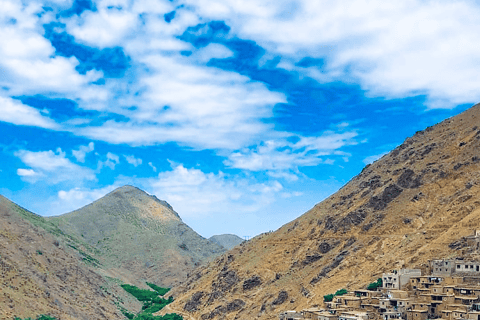

Imlil Marrakech is a journey that begins long before the road starts to tilt upward. Leaving the city in the early morning involves navigating the drying heat of the Haouz Plain, where pink-walled outskirts give way to silver-green olive groves. The High Atlas remains a jagged silhouette, often shrouded in a heat haze until you pass the dusty crossroads of Tahannaout.
By the time you reach the Rherhaya River valley, the air has changed. The heavy, spice-laden scent of the city is replaced by something thinner and cooler, carrying the faint, sharp aroma of scorched earth and juniper. Moving from Marrakech to Imlil is a slow-motion transformation, shifting from the frenetic energy of the souks into a world where time is measured by walnut harvests.
In short: The journey is a sensory shift from the dry, dense heat of the Marrakech plains to the cool, oxygen-rich atmosphere of the High Atlas foothills.
Ready to experience Imlil beyond the guidebooks?
Take a calm, well-paced Excursion to Imlil Valley and let the mountains set the rhythm.
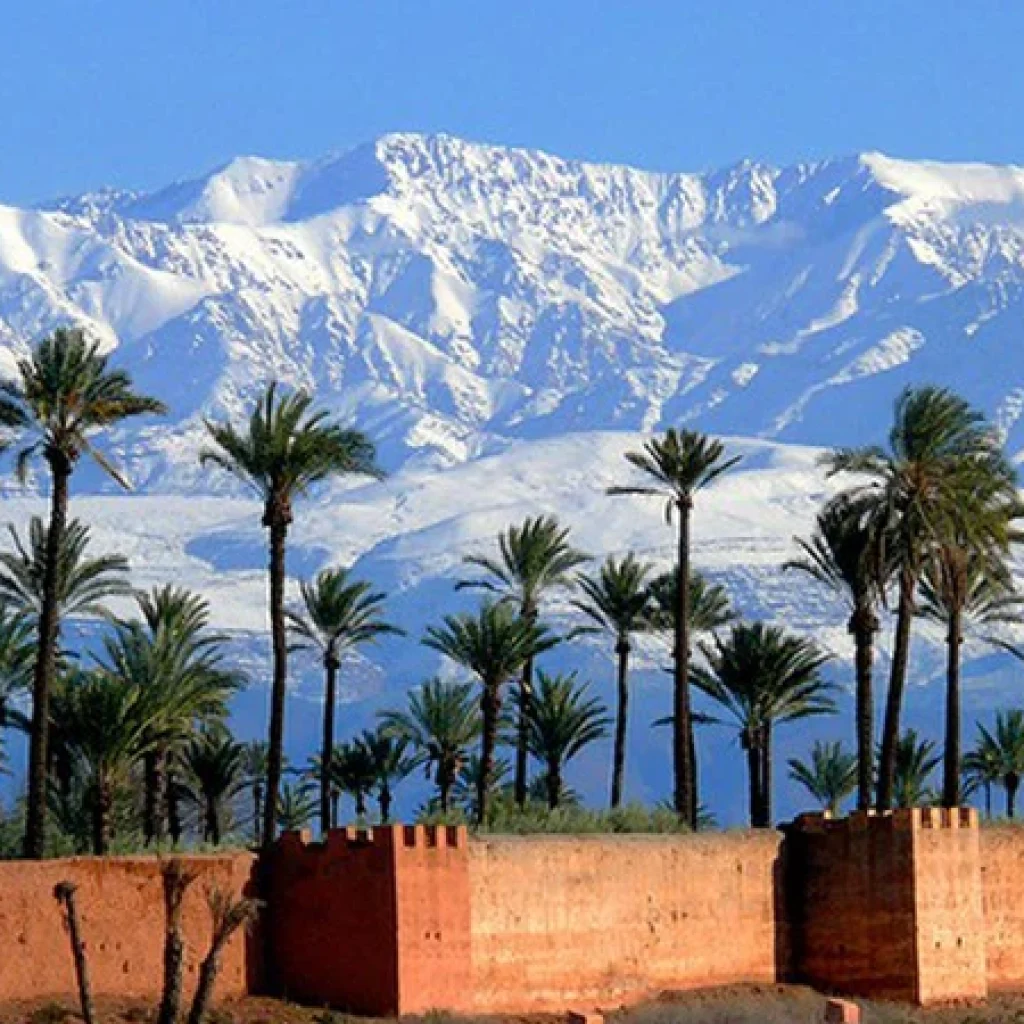
What “Imlil Marrakech” really means for travelers
For many, the link between Imlil and Marrakech is more than just a route on a map; it is the threshold between urban Morocco and the ancestral lands of the Amazigh people. Imlil village Morocco is not merely a destination or a base camp for climbers. It is a working mountain community that provides a necessary cultural counterweight to the city.
Marrakech offers accessibility and international trade, while Imlil offers perspective and verticality. In the village, life is defined by stone paths and ancient irrigation channels (seguias) that have functioned for centuries. It is a place where the scale shifts from the sprawling horizontal city to the towering granite peaks of the High Atlas.
In short: This route connects the cultural capital of the plains to the heart of the High Atlas, offering a transition from cosmopolitan life to traditional mountain rhythms.
Distance & travel time (real expectations)
The physical distance from Marrakech to Imlil is approximately 65 kilometers. On a map, this looks like a short hop, but mountain kilometers are measured differently. Once you leave the main road and begin the ascent past Asni, the pace naturally slows.
A typical journey takes between 90 minutes and two hours. This accounts for winding roads and yielding to the occasional flock of sheep. If traveling on a Saturday, the local souk in Asni creates a lively bottleneck of mules and vendors, adding about twenty minutes to your arrival in Imlil village Morocco.
In short: Expect a 90-to-120-minute drive, where the speed decreases as the scenery becomes more dramatic and the roads more serpentine.
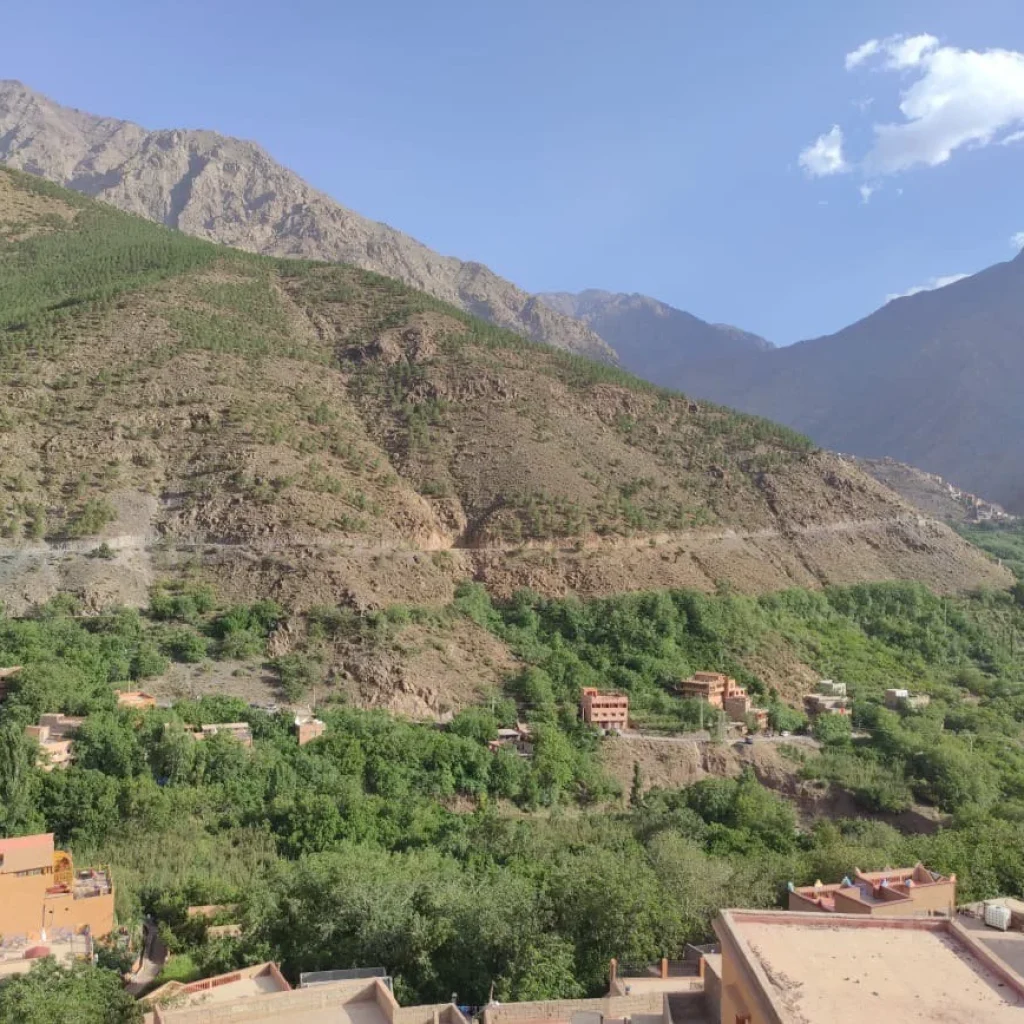
Ways to reach Imlil from Marrakech
Choosing how to travel involves balancing economy, comfort, and the depth of the experience. Each method offers a different lens through which to view the landscape as it rises.
Shared transport
The most social method is the grand taxi, usually found at the taxi rank near Bab Er Robb in Marrakech. These vehicles depart once all seats are sold. It is a cramped, authentic experience where you might sit next to a local farmer returning from the city with supplies.
Private driver
Hiring a private vehicle allows for a “stop at will” approach. The road to Imlil is punctuated by vantage points where the sunlight hits the red clay villages just right. It is the preferred method for those who want to absorb the scenery without the stress of navigating mountain bends.
Organized excursion
For a single-day visit, an organized excursion provides the most context. The value lies in the narrative provided by a local guide who can explain tribal boundaries or the engineering of terraced gardens. It removes the logistical burden of coordinating transport once you reach the village.
In short: Options range from budget-friendly shared taxis to the informative and seamless nature of a structured day trip.
If you prefer a calmer, well-paced way to experience this transition, choosing a structured approach to the valley can help ensure you don’t miss the subtle details of the mountain landscape.
What you actually see along the road
The drive is a visual lesson in geography. Leaving Marrakech, the earth is a dusty, pale ochre. As you climb, the soil turns a deep, bruised red due to high iron content. This is the earth used to build the pisé (rammed earth) houses that cling to the hillsides.
The Moulay Brahim Gorges are particularly striking, with steep limestone walls leaning over a ribbon of vibrant green riverbed. Below, women wash rugs in the stream and children sell seasonal fruits like cherries or walnuts. Near Imlil, the grey peaks of Jebel Toubkal dominate the horizon, often white with snow.
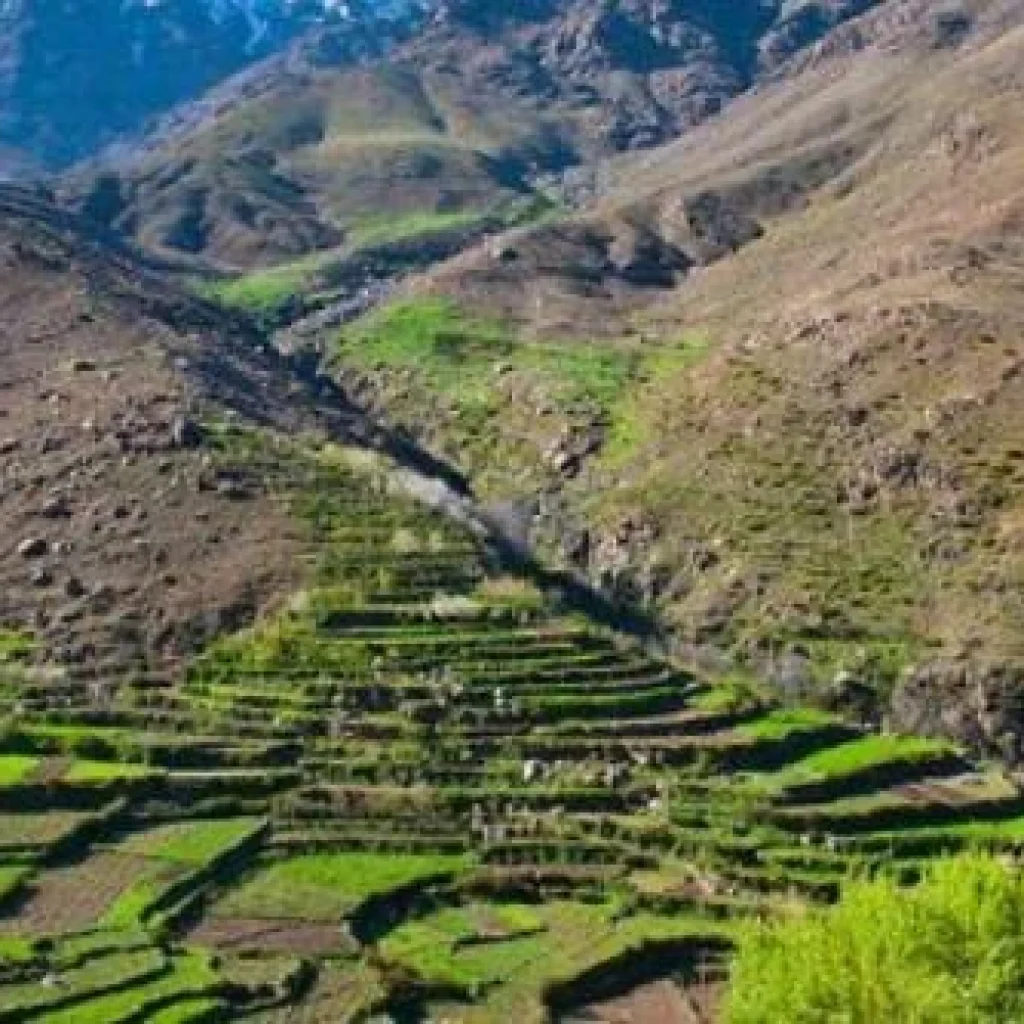
In short: The route is defined by a color palette of deep red earth, bright green riverbanks, and the grey-white peaks of the High Atlas.
Best seasons & daily timing
Timing your visit to Imlil Morocco is about choosing your preferred atmosphere. In Spring (March to May), the almond and cherry blossoms are out, and the air is crisp with snowmelt. Autumn (September to November) brings the walnut harvest and a heavy, golden light perfect for photography.
Summer (June to August) offers a cool sanctuary from the 40°C heat of Marrakech, though it is the peak season for hikers. Winter (December to February) turns Imlil into an alpine village with snow on the floor. Regardless of the season, leaving Marrakech by 8:30 AM ensures you arrive before the midday sun is strongest.
In short: Spring offers blossoms and water; autumn offers the harvest and soft light. Early morning departures are essential to maximize the day.
Visiting independently vs with local guidance
It is possible to walk through Imlil village Morocco alone, as the main trails are well-trodden. However, visiting independently often feels like watching a film without the sound. You see the villages, but you may miss the social fabric that connects them.
A local guide acts as a bridge, facilitating conversations and navigating smaller paths that bypass the main mule tracks. They can explain the spacing of walnut trees or the history of the “Marabout” shrines. It turns a simple walk into a story about the community’s relationship with the mountains.
In short: While the main paths are easy to follow alone, a local guide provides the cultural and historical depth that makes the mountains come alive.
Practical advice for a smooth day
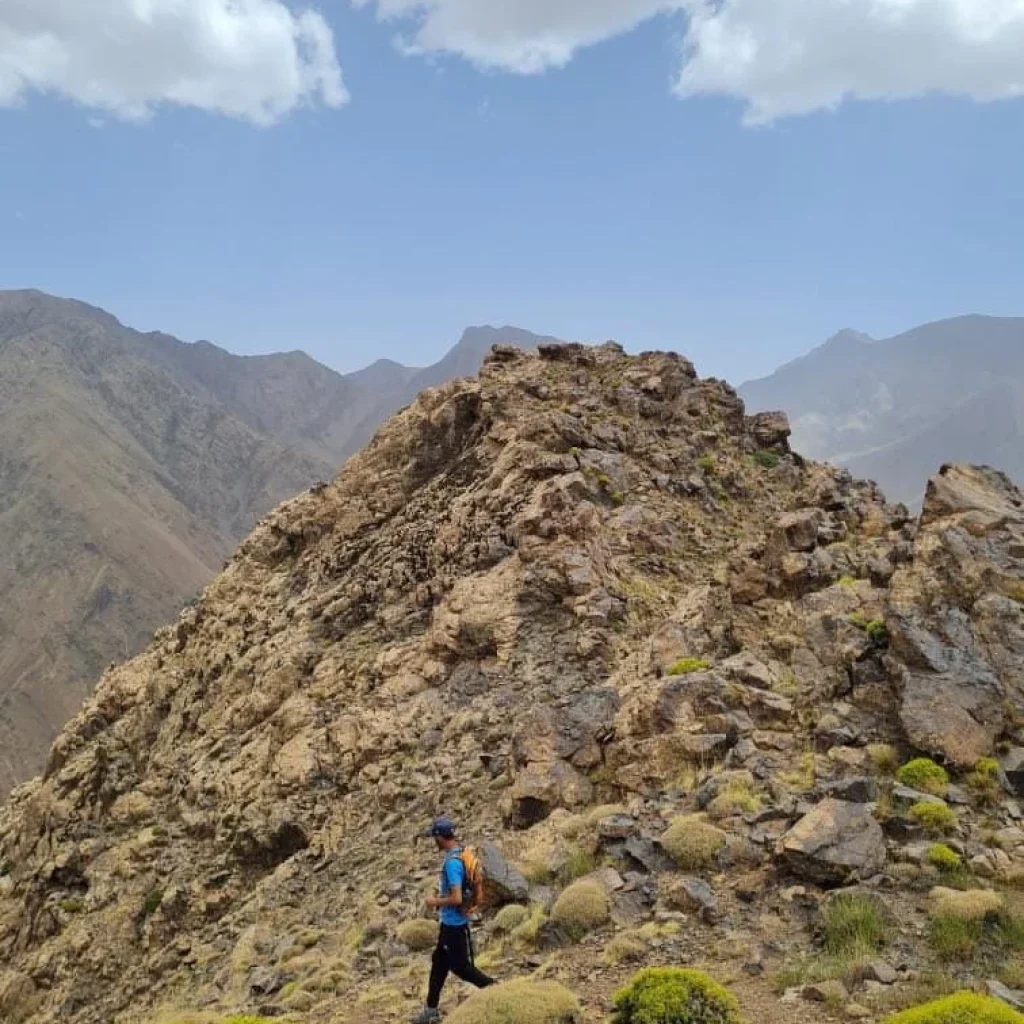
To enjoy the Imlil Marrakech journey, keep these practicalities in mind:
- Footwear: Wear shoes with good grip, as the paths are rocky and uneven.
- Temperature: Imlil is usually 10 to 15 degrees cooler than Marrakech; bring a layer.
- Currency: There are no reliable ATMs in Imlil; carry enough Moroccan Dirhams for lunch and crafts.
- Sun protection: The mountain air is thin and the sun is deceptively strong.
- Respect: Always ask before taking photos of people in the smaller villages.
Taking the time to prepare for the altitude and the terrain allows you to focus on the quiet beauty of the Atlas. An excursion to Imlil Valley is most rewarding when you are equipped for the environment.
Short FAQ
How long is the drive from Marrakech to Imlil? The drive is about 65 kilometers and typically takes 90 minutes to 2 hours.
Can I see snow in Imlil? Yes, snow is common from November through April, and peaks are often white into late spring.
Is it difficult to walk in the Imlil Valley? There are trails for all levels, from gentle walks through walnut groves to steeper village treks.
What should I wear for a day trip to Imlil? Wear sturdy walking shoes and bring layers, as mountain weather changes quickly.
Are there places to eat in Imlil? Yes, several guesthouses and cafes serve traditional Berber tajines with panoramic views.
Conclusion
The road back from Imlil to Marrakech always feels different. As the car descends, the air warms and the distant lights of the city begin to glimmer. There is a specific kind of fatigue that comes from a day in the mountains a quiet tired that stems from the scale of the landscape.
Imlil does not demand much from its visitors other than their attention. It rewards the slow observer who notices the light shifting across the shale slopes. Returning to the red city, you carry a bit of that high-altitude stillness with you, a quiet counterweight to the beautiful chaos of Marrakech.
Prefer an easy, stress-free day to the valley?
Explore Imlil with a thoughtfully planned excursion transport, timing, and local insight included.
Author Bio
Ayoub H. is a travel writer who has documented the changing rhythms of the High Atlas for over a decade. He focuses on the intersection of traditional Amazigh culture and sustainable travel. He prefers the smell of mountain juniper to the bustle of the souks and believes the best way to see Morocco is at the pace of a walking mule.
0 Comment