The journey from Marrakech to High Atlas Mountains is a transition that is rarely a sudden event. Leaving the city usually involves a slow crawl through the outer suburbs, where the mopeds thin out and the air begins to lose its heavy, sun-baked scent of dust and exhaust. You look ahead, and the peaks stand as a hazy, jagged wall against the sky; for a long time, they don’t seem to get any closer.
Then, the road begins to tilt. The olive groves of the Al Haouz plain give way to red earth and the first few curves of the foothills. You notice it first in your ears the slight pop of pressure and then in the temperature. The dry heat of the city softens into a cooler, thinner breeze. By the time you reach the first real switchbacks, Marrakech feels like a different country entirely.
What the journey from Marrakech to High Atlas Mountains involves
The distance from Marrakech to the main gateway villages like Imlil or Ouirgane is relatively short on paper roughly 60 to 90 kilometers. However, mountain kilometers are not city kilometers. What looks like an hour’s drive on a map usually takes two.
You are climbing from an elevation of about 460 meters in Marrakech to over 1,700 meters if you are heading toward the trekking hubs. The pace of life slows down as the incline increases. You move from the frantic, horizontal energy of the souks to a vertical world where time is measured by the sun hitting the valley floor and the seasonal harvest of walnuts or apples.
In short: It is a transition from urban heat to alpine air, covering a significant elevation gain over winding roads that require patience.
There are three primary ways to manage the route, each offering a different relationship with the landscape.
Shared transport (Grand Taxis)
This is how locals move. You head to the taxi stands near Bab Er Robb. You wait for a large Mercedes to fill with six passengers. It is cramped, loud, and entirely authentic. You will likely be squeezed between a local trader and someone carrying supplies for a mountain village. It is the cheapest option, but it offers no flexibility to stop for photos or air.
Private driver
Hiring a driver for the day is the middle ground. It allows you to stop when the light hits a certain ridge or when you see a roadside stall selling fresh bread. The drivers who work these routes daily are experts at navigating the tight turns and often know the best spots for a coffee with a view that isn’t crowded with other travelers.
Organized experience
A structured high atlas tour from marrakech removes the mental load of logistics. You aren’t worrying about road conditions or where to find a reliable lunch. These are usually pre-planned routes that hit specific valleys, like the Ourika or the Mizane.
In short: Shared taxis are for the budget-conscious and hardy; private drivers offer flexibility; organized tours provide a logistical safety net.
The visual transition: What you see
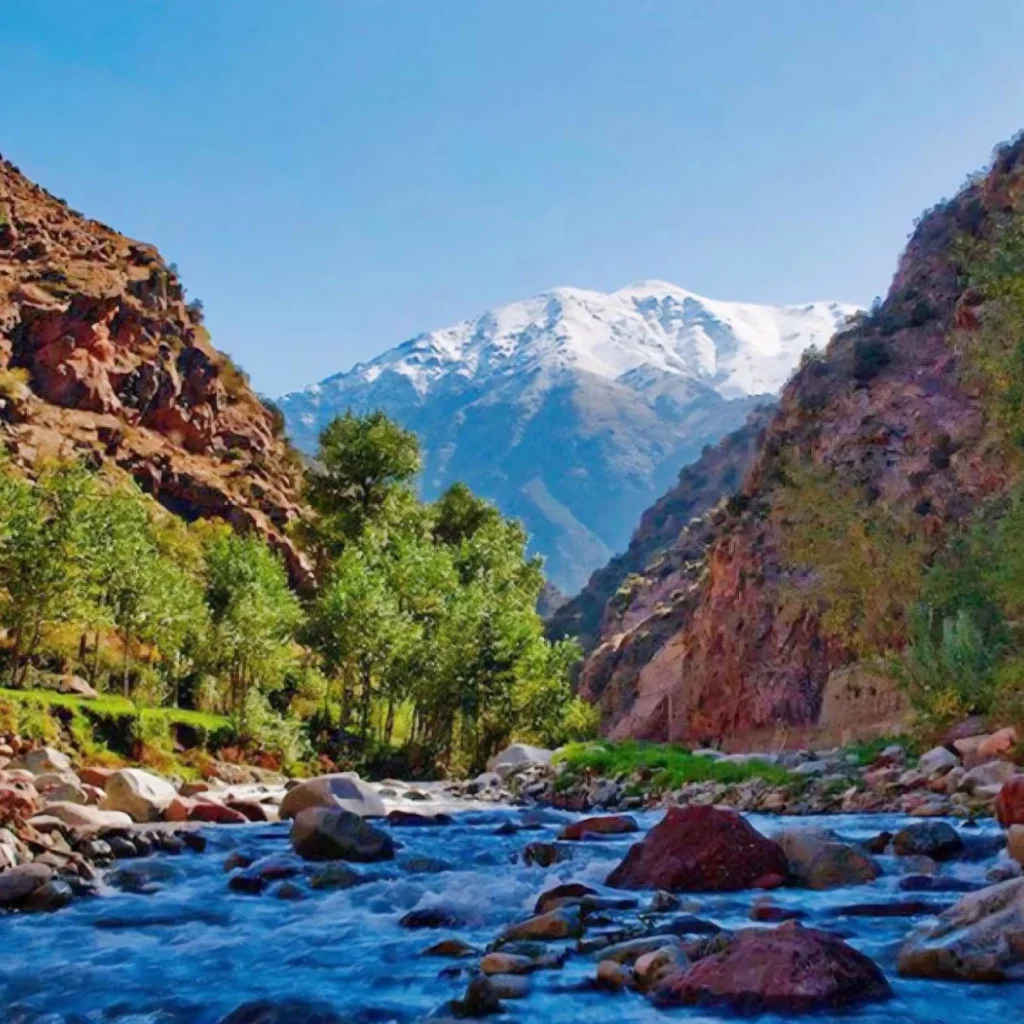
As you move deeper into the High Atlas mountains morocco, the scenery undergoes a structural change. The wide-open plains narrow into deep V-shaped valleys.
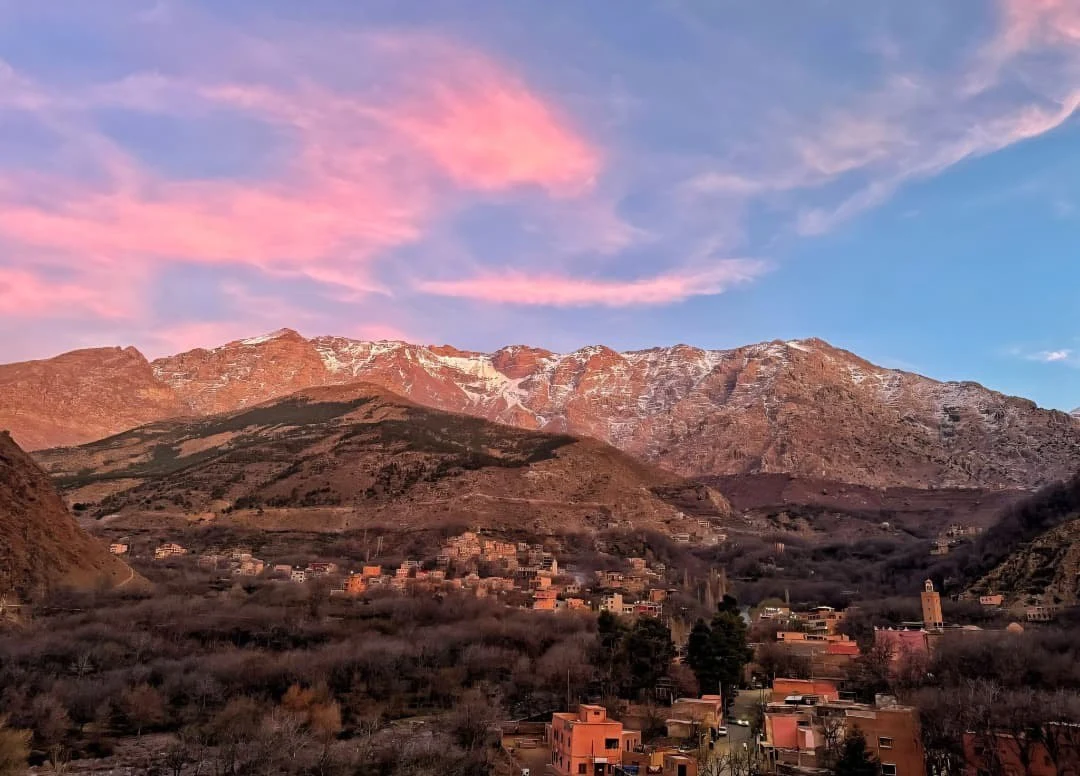
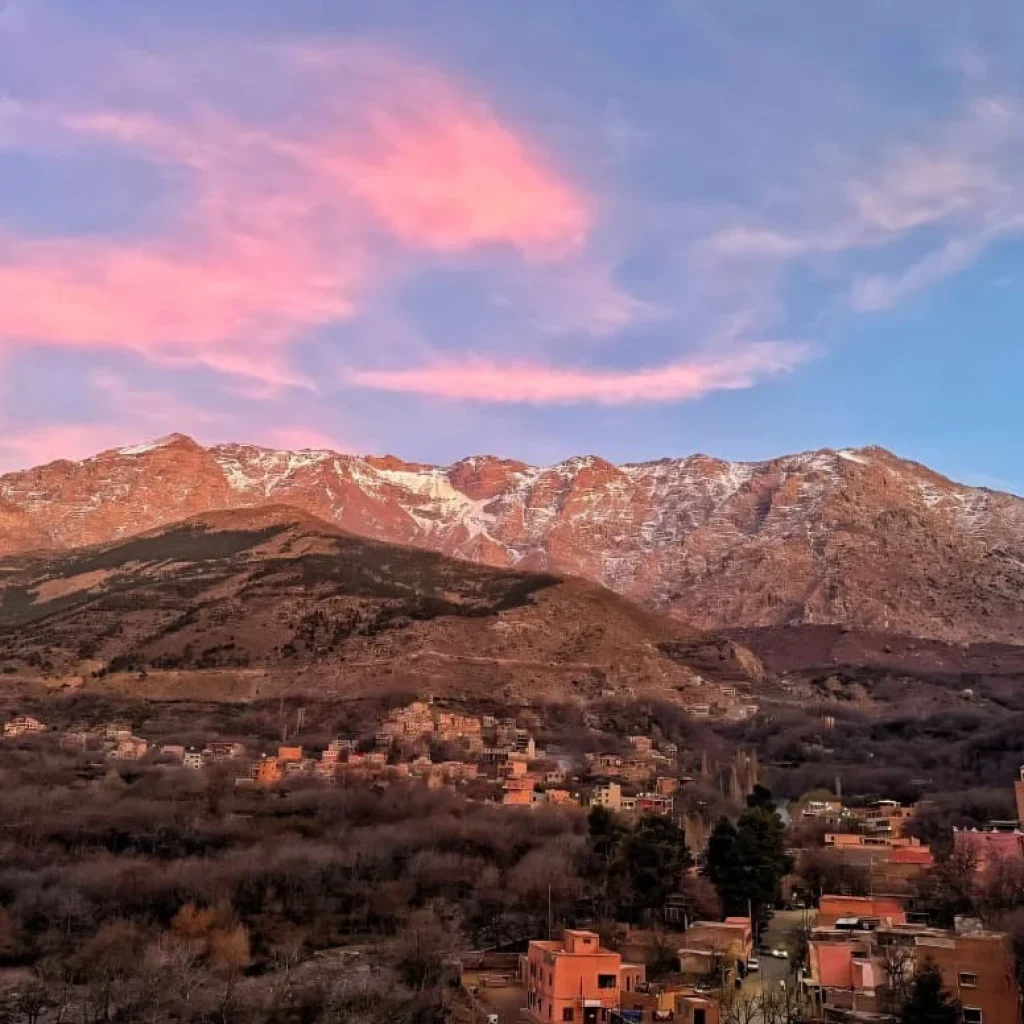
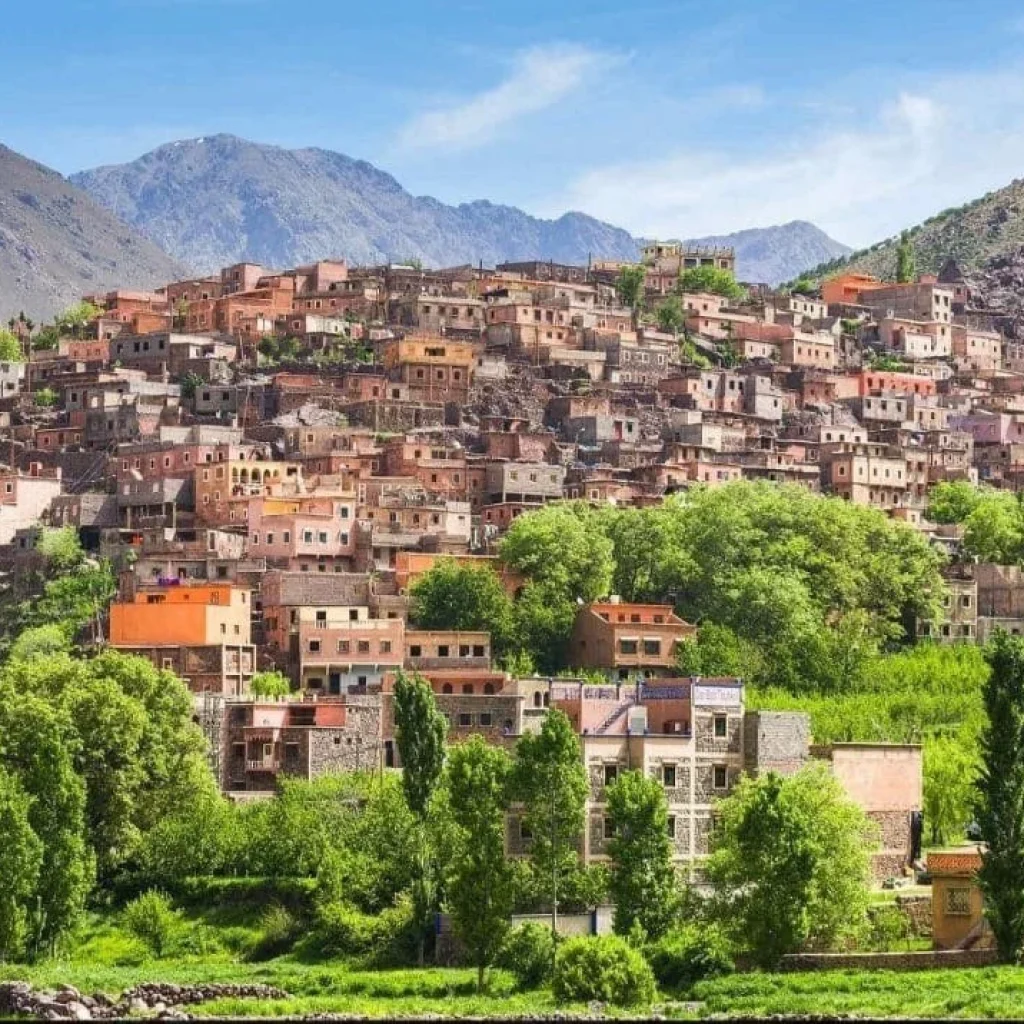
You will see villages built from the very earth they sit on. These pisé (rammed earth) houses are the color of the surrounding cliffs deep ochre, dusty rose, or slate grey. In the spring, the valley floors are an intense, neon green with young barley and clover, contrasted against the white blossoms of cherry and almond trees.
Observation is the best way to pass the time. You’ll see mules heavily laden with gas canisters or flour being led up paths that look impossible for a vehicle. You’ll see women washing rugs in the river and children walking long distances to school with backpacks bouncing against their coats. The light here is different; it is sharper and more honest than the filtered haze of the city.
In short: The landscape shifts from flat plains to dramatic, earth-toned villages and terraced agriculture that clings to the mountainsides.
Timing, seasons, and the reality of comfort
The experience of a marrakech high atlas day trip changes radically with the calendar.
Spring (March to May): The most visual season. The snow is melting, the rivers are high, and the wildflowers are out. It is comfortable for walking.
Summer (June to August): While Marrakech swelters at 45°C, the mountains are a sanctuary. The air is dry and cool, though the sun is very strong at high altitudes.
Autumn (September to November): Harvest time. The air is crisp, and the walnut trees turn gold. It is arguably the best time for photography.
Winter (December to February): It is cold. Snow often blocks the higher passes, and the villages can be muddy. If you go now, you need proper layers and an appreciation for a quiet, stark landscape.
Morning travel is always better. The clouds often roll in by mid-afternoon, and the descent back to Marrakech in the dark can be tiring due to the lack of road lighting and the intensity of the curves.
In short: Spring and autumn offer the best balance of weather and color, while summer provides a necessary escape from the city heat.
Independent vs. Guided travel
Traveling independently to the Atlas mountains from marrakech is entirely doable if you are staying on the main roads. If you just want to sit in a cafe in Imlil and look at the peaks, you don’t need a guide.
However, if you plan to walk, a guide is more than just a navigator. The trails aren’t marked like they are in Europe or North America. A local guide acts as a cultural bridge, explaining the nuances of the Berber (Amazigh) communities you pass through and ensuring you don’t accidentally wander onto someone’s private farmland. They also manage the fatigue knowing when to push and when to stop for mint tea.
In short: Independence offers freedom of schedule; a guide offers safety and a deeper understanding of the local culture.
Practical advice for the road
The motion factor: If you get car-sick, take precautions. The roads are a constant series of bends and loops.
Layering: It can be 25°C in the city and 10°C in the mountains. Bring a windbreaker or a fleece, even in summer.
Footwear: You don’t need heavy boots for a day trip, but sneakers with good grip are essential for the uneven, rocky paths in the villages.
Hydration: The air is dry. You will get a headache from the altitude and dehydration before you realize you are thirsty.
Cash: Once you leave the city, ATMs are rare and often empty. Carry small denominations of Dirhams for tea, bread, or small hand-woven items.
For those who find a single day too rushed, staying overnight is the only way to feel the true rhythm of the mountains. From Marrakech: Discover High Atlas Mountains (5 Days) is an option for travelers who want to move past the day-trip crowds and see the more remote valleys at a slower pace.
Frequently Asked Questions
How long does it take to get to the mountains?
To reach the main hubs like Imlil or Ourika, allow 90 minutes to two hours each way, depending on traffic leaving Marrakech.
Can I see snow?
Usually from November through April. The peaks of the High Atlas remain white well into the spring, though the villages themselves may be clear.
Is it safe for solo travelers?
Yes. The mountain communities are generally very welcoming. The main challenge for solo travelers is usually navigating transport logistics rather than any safety concerns.
What should I wear?
Dress modestly out of respect for the rural villages. Long trousers or skirts and shirts that cover the shoulders are appropriate.
Is a day trip enough?
It gives you a taste of the scenery, but you will spend 4 hours of your day in a vehicle. If you want to actually hike, an overnight stay is recommended.
About the Author
I am a travel writer who has spent the last decade drifting between the urban density of Marrakech and the quiet valleys of the High Atlas. I prefer the smell of woodsmoke to the smell of gasoline, and I’ve walked the route to Imlil in every season. My goal is always to provide a realistic view of the road, accounting for the dust, the fatigue, and the quiet moments of clarity that only the mountains provide.

0 Comment