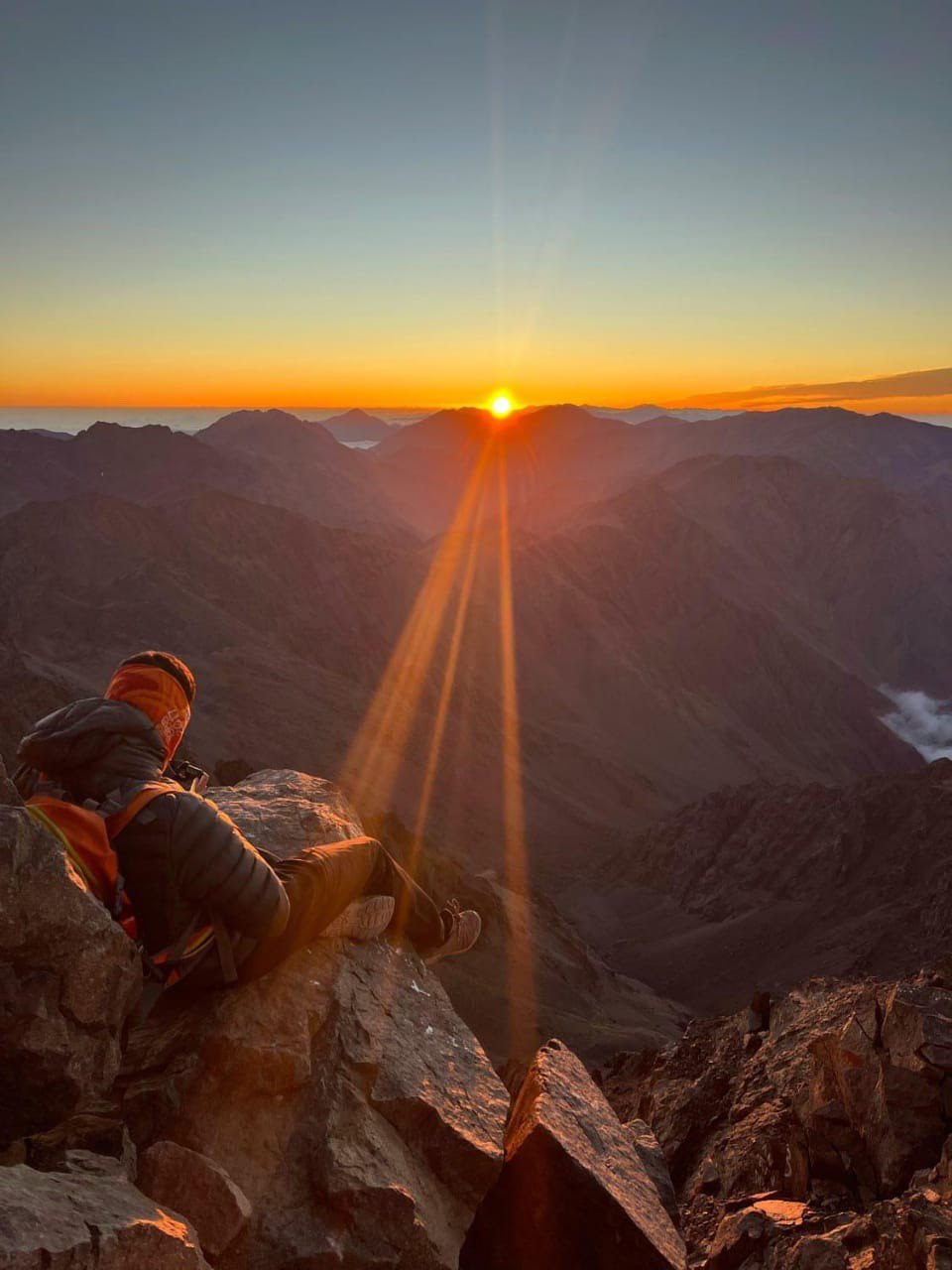

The sun had barely touched the peaks when I found myself on the dusty path leading to the Toubkal refuge. The wind carried the scent of mint tea wafting from a small hamlet, and the majestic silence of the summits reminded me just how unique the Morocco Toubkal trek truly is. Nothing else compares: not the Alps, not the Dolomites. Here, everything is more raw, more human, more profoundly authentic.
Whether you’re a curious trekker or a seasoned mountaineer, this adventure to the highest peak in North Africa is a truly memorable journey, especially if you know the right tips to make the most of it.
Book your Toubkal ascent (3 days) with a local guide → link to Explore Toubkal Mount 4167m (3 Days)
1. Why is the Morocco Toubkal Trek so unique?
The Morocco Toubkal Trek is not just a climb: it’s a complete immersion in Amazigh traditions, the spectacular geography of the Atlas Mountains, and the rhythm of mountain life. Here’s what makes this region so special:
A constantly changing landscape
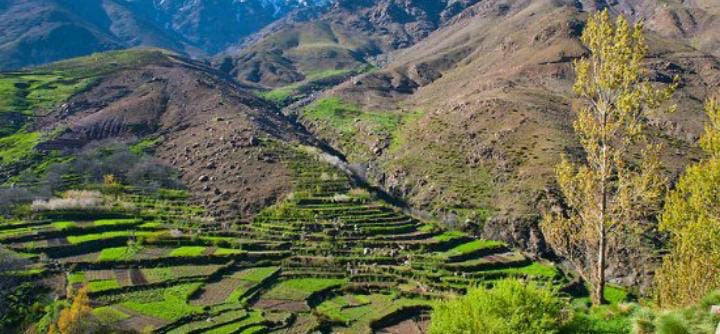
- Verdant valleys around Imlil
- Lunar plateaus towards Sidi Chamharouch
- Typical grey-black volcanic scree near the summit
- Steep peaks sometimes reminiscent of the Andes
Every hour of walking reveals a different landscape. This is one of the few treks where you traverse so many microclimates in such a short time.
A Living Amazigh Culture
The Amazigh (Berber) people are the original inhabitants of the Atlas Mountains. In their villages:
- Stone houses blend seamlessly into the mountainside.
- Warm bread is baked in traditional ovens.
- The welcome is simple yet warm.
It is this authenticity that makes the Toubkal Trek Morocco a profoundly human adventure.
⛰ A legendary mountain
Jebel Toubkal rises to 4,167 m, making it:
- The highest peak in Morocco
- The roof of North Africa
- One of the most accessible treks despite its altitude
2. Step-by-Step Itinerary for the Toubkal Morocco Trek
Here is a typical itinerary for the Toubkal Morocco Trek, based on years of experience in the region.
Day 1: Imlil → Sidi Chamharouch → Toubkal Refuge
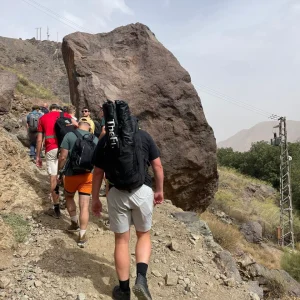
- Departure from Imlil (1,740 m)
- Passing through the villages of Aroumd and Mizane
- Break at Sidi Chamharouch, a spiritual site associated with a local legend
- Gradual ascent to the refuge at 3,207 m
Terrain: rocky path, gentle climbs, steeper sections before the refuge.
Day 2: Mountain Refuge → Summit of Toubkal → Return to Imlil
- Departure before dawn
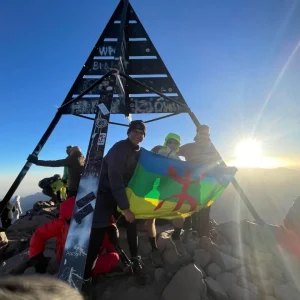
- Ascent via scree slopes
- Arrival at the summit between 7:30 and 9:00 AM
- Panoramic views of the High Atlas Mountains, the Sahara Desert, and deep valleys
- Descent to Imlil in the afternoon
Terrain: Unstable scree slopes, slippery sections, especially in winter.
Discover our complete 3-day trek to reach Toubkal safely → link
3. 5 Powerful Tips (Passed by Amazigh Guides)
These tips come directly from local guides, with whom I have hiked these mountains dozens of times.
1) Acclimatize Slowly
Many underestimate the rapid ascent from 1,740 m to 4,167 m in less than 36 hours.
The guides recommend:
- Walking more slowly than your usual pace
- Drinking at least 2 liters of water per day
- Arriving in Imlil one day early if possible
2) Start the climb at night
According to the guides:
“The summit is easier when the rocks are cold. You see the steep path less clearly, and your mind works better.”
Ideal start time: 4:00–5:00 a.m.
3) Never walk too close to others in scree
The rocks roll quickly. The guides emphasize:
- Keep a few meters apart
- Check where you place your feet
- Slow down on unstable sections
☕ 4) Eat more often than usual
The cold and altitude burn calories.
Their advice:
- Dried fruit
- Moroccan bread
- Regular short breaks
5) In winter: crampons are mandatory
Even if the snow looks thin, it freezes very quickly. Amazigh guides never compromise on this point.
4. Best Time for the Morocco Mountain Toubkal Trek
The climate in the High Atlas Mountains changes quickly, but here’s a reliable guide:
Best Seasons
- April → June
- September → November
Clear skies, pleasant temperatures, minimal snow.
❄For snow lovers
- December → March
A more technical trek, but magnificent.
Avoid if possible
- July–August:
extreme heat, especially in the valley.
5. Required Fitness Level
Let’s be honest: the Mount Toubkal trek in Morocco is not technical, but it is demanding.
You should be able to:
-
Walk 6 to 8 hours per day
-
Climb 1,000 m (3,280 ft) of elevation gain in a single day
-
Handle the cold at the summit
Recommended:
-
Having completed at least one hike with 1,000–1,500 m (3,280–4,920 ft) of elevation gain
-
Doing some light cardio in the weeks before departure
6. Checklist: What to Pack?
Here is the most useful list according to local guides:
Essential Gear
-
Trekking shoes (with firm soles)
-
30–40 L backpack
-
Hiking poles
-
Crampons (in winter)
Clothing
-
Warm jacket (fleece + light down jacket)
-
Gloves
-
Beanie
-
Breathable T-shirt
-
Trekking pants
Accessories
-
Sunscreen (very important)
-
Mountain sunglasses
-
Headlamp (mandatory for the night ascent)
-
Water bottle or 2 L hydration bladder
Food
-
Dried fruits
-
Energy bars
-
Small biscuits
7. Approximate Costs for a Toubkal Trek in Morocco
Prices vary depending on the season, group size, and included services.
In general:
-
Guide + muleteer: low to medium budget
-
Toubkal refuge: affordable
-
Equipment rental: small extra cost
-
Transport Marrakech → Imlil → Marrakech: very accessible
Overall, it remains the most economical high-mountain adventure in North Africa, without sacrificing quality.
8. FAQ – Morocco Toubkal Trek
1. How many days are needed for the trek?
Generally 2 days, but 3 days provide better acclimatization.
2. Do you need a guide?
Highly recommended for safety, especially in winter or off-season.
3. Can you do the trek alone?
Yes, but the trails change depending on the season; a local guide knows the mountain perfectly.
4. Is there network coverage?
Very weak. The refuge sometimes has Wi-Fi, but don’t rely on it.
5. Is it dangerous?
With a professional guide and proper equipment, the Toubkal trek in Morocco is considered safe.
Conclusion
The Morocco Toubkal trek is one of the most intense and authentic experiences in the High Atlas. With its volcanic landscapes, welcoming Amazigh villages, and the unique feeling of reaching Toubkal’s 4,167 m (13,671 ft) summit, this trek leaves a deep impression on every traveler.
If you dream of exploring these mountains safely with an experienced local guide, contact us to organize your Toubkal trek. An authentic adventure awaits youjust above the clouds.
0 Comment