

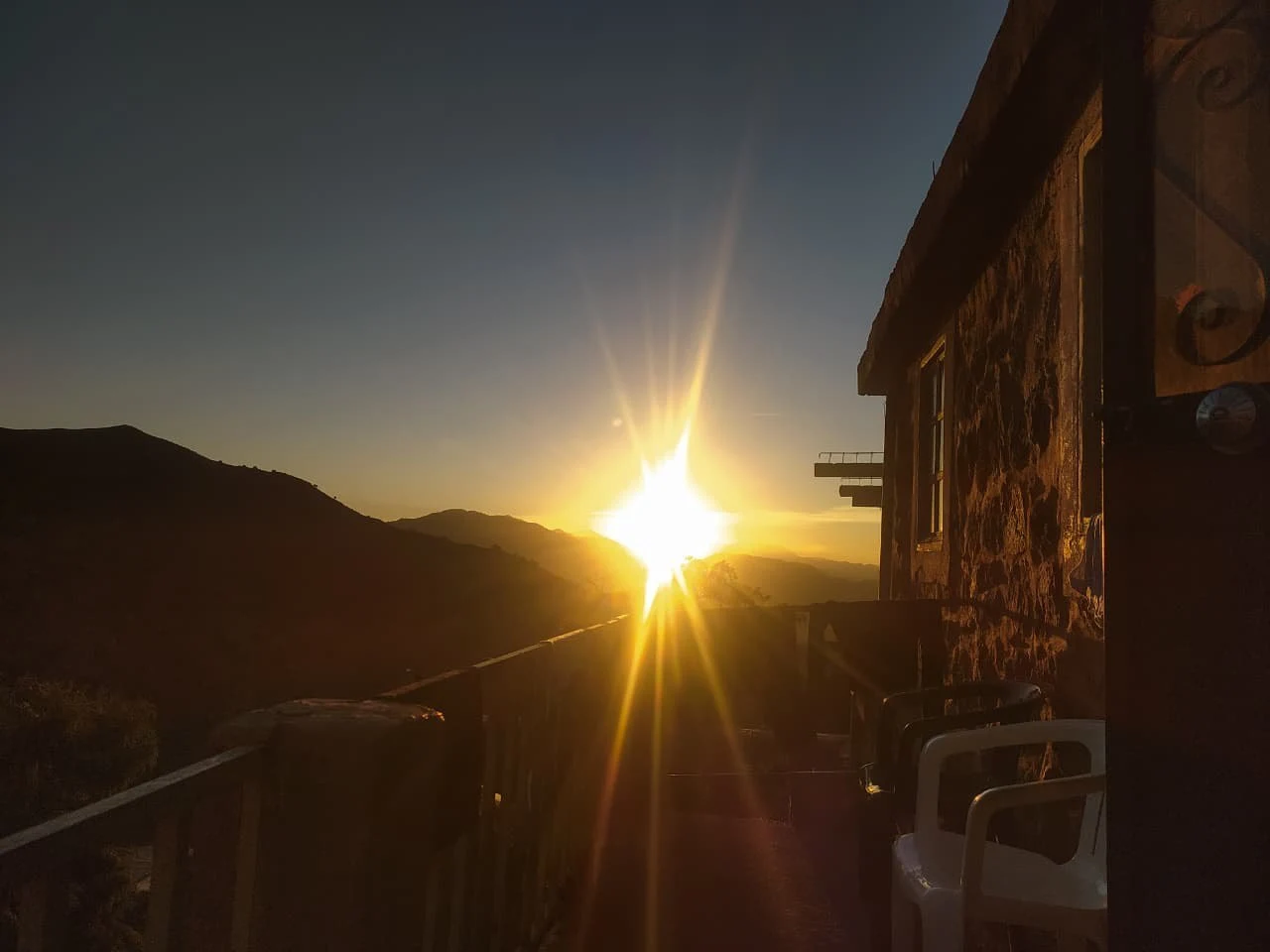

Just before sunrise in Imlil, the valley is still half asleep. A mule bell rings somewhere above the stone houses, headlamps move along the path to Aroumd, and the first jeep from Marrakech coughs into the village square. The air feels colder than it looks, and Mount Toubkal is still invisible, hidden behind the dark ridge.
It’s in this kind of calm, practical atmosphere that most Toubkal trek 2 days begin. No drama, no expedition banners just day packs, thermos flasks, and people adjusting their walking poles while the call to prayer fades across the valley.
What makes Toubkal unique for 2-day trekkers
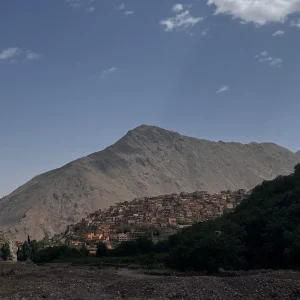
For such a short trip, Toubkal is unusually “big” in both altitude and atmosphere. At 4,167 m, it’s the highest point in North Africa, yet it’s only a few hours’ travel from Marrakech and linked to a dense network of traditional paths between Amazigh (Berber) villages.
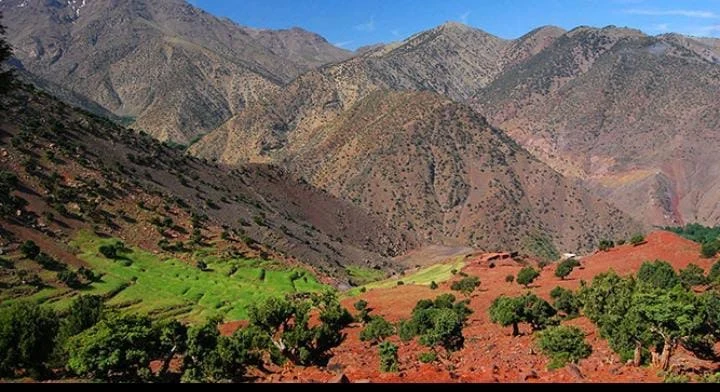
The Mount Toubkal 2 days format works because of three things: access, infrastructure, and cultural depth. The access is straightforward: road to Imlil, mule track to the refuge, then a clear summit route. Refuges and mountain shelters sit high in the valley, so you can gain serious altitude on day one and keep day two focused on the summit. Around you, the High Atlas forms a classic cultural landscape of terraced fields, communal pastures, and seasonal transhumance that organisations like UNESCO describe elsewhere in the range as globally significant.
Why Toubkal works well as a 2-day trek
-
Quick access from Marrakech (about 1.5–2 hours by road).
-
Clear, established Toubkal itinerary with mountain refuges.
-
High summit for a short time commitment.
-
Immersive Amazigh village life in Imlil and along the trail.
-
Possibility to extend into a longer High Atlas trek if you have extra days.
Micro-summary: Toubkal works unusually well for a 2-day trek because road access, refuges, and traditional paths compress a high-altitude experience into a short window. You still need to treat it as a serious mountain, not just an upgraded day hike.
Step by step breakdown of the 2-day Toubkal itinerary
There are variations, but a classic 2-day Toubkal climb usually looks like this.
Day 1 – Imlil (≈1,740 m) to refuge (≈3,200–3,250 m)
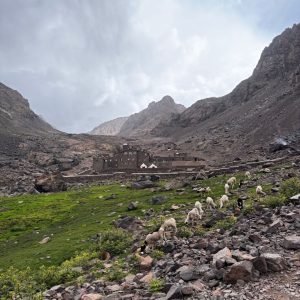
Most groups leave Imlil between 8:30 and 10:00. The path climbs past Aroumd and into the Mizane Valley, passing a small shrine at Sidi Chamharouch where the air often feels noticeably cooler and thinner. From there, the trail steepens, crossing seasonal snow patches in spring and autumn before reaching the cluster of refuges below Toubkal’s south face.
Typical Day 1 outline
-
Start: Imlil village.
-
Distance: 10–12 km, depending on starting point.
-
Ascent: roughly 1,300–1,500 m.
-
Time: 5–6 hours at a steady pace.
-
Overnight: refuge dormitory or basic lodge.
Day 2 – Refuge to Toubkal summit Morocco (4,167 m), then back to Imlil
Summit day usually begins in the dark. Headlamps pick out the zigzag path above the refuge, and the temperature can be sharply below freezing, even in late spring. Some days the ridge feels windier than expected, with gusts that bite at exposed fingers and camera batteries. After 3–4 hours of climbing, a line of cairns leads onto the broad summit, where the iron pyramid and long views across the High Atlas and Sahara plateau make the effort feel very concrete.
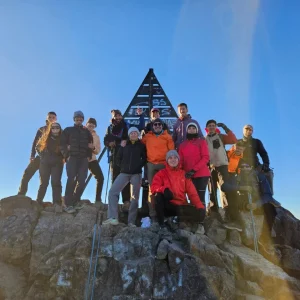
The descent follows the same valley, and by mid-afternoon you’re back in Imlil, boots dusty, legs tired, mind still processing the fact that you reached the top of North Africa in just two days.
Typical Day 2 outline
-
Start: refuge before dawn.
-
Ascent to summit: 3–4 hours.
-
Descent back to refuge: 2 hours.
-
Descent to Imlil: 3–4 hours.
-
Total time on feet: 8–10 hours.
Micro-summary: The classic 2-day Toubkal itinerary is simple but demanding: one long approach to the refuge, then a concentrated summit day with big elevation gain and loss. The route is clear, but the pace, altitude, and weather make it a genuine mountain outing.
Expert advice from local guides
Talk to guides in Imlil and you’ll hear the same phrase in different accents: “Slow is strong.” The mistake many people make on a Toubkal trek 2 days is treating day one like a fitness challenge instead of the start of an altitude journey.
Experienced local guides tend to emphasise:
-
Pace: Walk at a speed where you can still talk in short sentences.
-
Hydration: Sip regularly; dry mountain air hides dehydration.
-
Layers: Use a simple system base layer, mid-layer, shell and adjust frequently.
-
Footing: Small, careful steps on scree above the refuge; running downhill is how ankles get twisted.
-
Respect for conditions: Wind and hard snow can turn a straightforward path into something more technical in winter and early spring.
If you’re planning to attempt this route, it’s worth consulting a local guide to confirm conditions for your dates, especially outside the main summer season.
Guide-inspired checklist
-
Check weather and wind forecast before leaving Marrakech.
-
Confirm if you’ll need crampons or micro-spikes (winter/shoulder seasons).
-
Agree on turnaround time with your guide for summit day.
-
Share any medical issues, especially related to altitude or asthma.
-
Carry basic first-aid and know where the nearest rescue point is.
Micro-summary: Local guides view the Toubkal trek 2 days as manageable but not casual; pacing, layers, and honest communication matter more than fancy gear. Their field notes can be the difference between a tough but enjoyable summit and a miserable, rushed experience.
If you want to compare route options or check conditions for your dates, you can review a detailed 3-day Toubkal itinerary that many trekkers prefer when they want a slower ascent.
Best time of year and mountain conditions
The High Atlas has a Mediterranean-mountain climate with Atlantic influence, which means cold, snowy winters and warm, often dry summers.
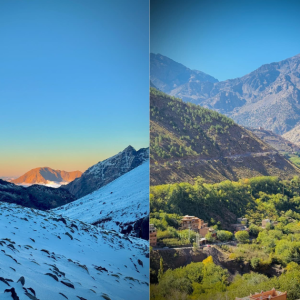
For a standard Mount Toubkal 2 days trek without technical gear, most trekkers aim for late April to October. Early season (April–May) often still has snowfields above the refuge; late June to September tends to be dry underfoot but can be hot in the lower valley. Winter ascents are possible but turn the trip into an alpine climb, requiring crampons, ice axe, and solid experience.
Season overview
-
April–May: Mixed conditions, patchy snow; beautiful light but unpredictable.
-
June–September: Most popular; generally dry, longer days, busy trails.
-
October–early November: Cooler, sometimes clearer, but early snow possible.
-
Winter: Technical; only with proper gear and experienced guide.
Micro-summary: For most trekkers, the best window for a 2-day Toubkal climb is late spring to early autumn, when the route is mostly snow-free. Outside that window, the same mountain demands winter skills and a more cautious approach.
Fitness level & difficulty explained simply
On paper, the numbers for the Toubkal trek 2 days look straightforward: roughly 1,500 m up on day one, about 1,000 m up and over 2,000 m down on day two. In reality, the altitude makes those figures feel heavier than they appear on your fitness app.
You don’t need to be a marathon runner, but you should be comfortable with full-day hikes on uneven terrain and with continuous ascent. Altitude can affect very fit people just as much as casual hikers; the key is honest pacing and listening to early warning signs such as headache, nausea, or unusual fatigue.
Who the 2-day Toubkal trek suits
-
Regular hikers used to 5–7 hour mountain days.
-
Travelers comfortable with basic dorms and simple facilities.
-
People ready to walk slowly but steadily for long stretches.
-
Not ideal as a first-ever mountain hike.
Micro-summary: The Toubkal trek 2 days is tough but achievable for regular hikers who respect the altitude and don’t rush. Think sustained effort rather than technical climbing, with the main challenge coming from elevation gain and thin air.
Practical packing list for a 2-day Toubkal trek
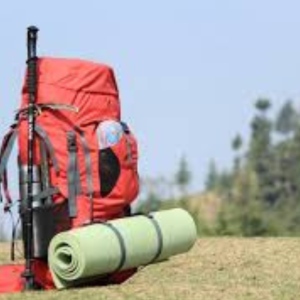
Packing too much makes the approach feel longer; packing too little makes summit morning colder and riskier than it needs to be. The goal is a lean kit that covers temperature swings between the warm valley and a possibly icy summit.
Core clothing
-
Light moisture-wicking base layers (top and bottom).
-
Fleece or light insulated mid-layer.
-
Waterproof/windproof shell jacket.
-
Trekking trousers + optional thermal leggings.
-
Warm hat, buff, and gloves (plus a backup thin pair).
Gear & extras
-
30–40 L backpack with rain cover.
-
Trekking poles (very helpful on descent).
-
Headlamp with spare batteries.
-
2L water capacity (bottles or bladder).
-
High-energy snacks and simple packed lunches.
-
Sunglasses and high-SPF sunscreen the light on snow can be intense.
Documents & small items
-
Passport copy and basic insurance details.
-
Small first-aid kit (plasters, blister care, pain relief).
-
Cash in dirhams for refuge extras and tips.
Micro-summary: A smart packing list for Mount Toubkal 2 days focuses on layers, light but reliable gear, and a few well-chosen extras for cold, wind, and sun. Travel light, but don’t cut corners on warmth or headlamp quality.
Costs: approximate ranges for a 2-day Toubkal climb
Prices fluctuate with season, group size, and what’s included, but you can think in ranges rather than precise figures.
Typical cost components
-
Guided 2-day package (from Marrakech): often includes transport, guide, refuge half-board, and mules for luggage; expect a mid-range price per person in a small group, higher for private.
-
Guide only (from Imlil): daily rate shared between trekkers.
-
Refuge overnight with meals: usually budget-friendly per person, with extra cost for hot showers or separate meals.
-
Gear rental (poles, crampons in winter): modest daily fee, varies by shop.
-
Tips and extras: tea, snacks, and small purchases add up but remain manageable.
Ranges shift year by year with inflation and exchange rates, so treat any specific number you hear as a snapshot, not a guarantee.
Micro-summary: The Toubkal trek 2 days is generally affordable compared to alpine climbs elsewhere, but total cost depends heavily on whether you book an all-inclusive package or organise services piecemeal in Imlil. Always confirm what’s included before you commit.
FAQ – short, direct answers
Is 2 days enough for Toubkal?
Yes, for fit trekkers with some hiking experience; three days is more comfortable.
Do I need a guide?
It’s strongly recommended, and in practice most people go with a local guide.
Can beginners do the Toubkal trek 2 days?
Not ideal; beginners should build up with shorter mountain hikes first.
What about altitude sickness?
Mild symptoms are common; go slowly, hydrate, and turn back if they worsen.
Can I do it in winter?
Only with proper gear, winter experience, and a qualified guide.
Where do most treks start?
Almost all standard Toubkal trek 2 days routes begin in Imlil.
Is the trail technical?
No rope is needed in summer conditions, but loose scree and snow can make footing tricky.
Key Takeaways
-
The Toubkal trek 2 days compresses a high-altitude experience into a very short schedule, thanks to road access and mountain refuges.
-
It’s a non-technical but demanding hike, with long days and real altitude on both the approach and summit days.
-
Conditions vary by season, with late spring to early autumn best suited to non-technical trekkers.
-
Local guide insight is valuable for pacing, weather calls, and route decisions, especially in shoulder seasons.
-
A thoughtful packing list and realistic view of costs make the 2-day Toubkal climb far smoother and safer.
-
Before finalizing your trek, consider reaching out to a certified guide in Imlil for updated weather and safety notes rather than relying only on older trip reports.
Before finalizing your trek, consider reaching out to a certified guide in Imlil for updated weather and safety notes rather than relying only on older trip reports
External authoritative sources referenced
-
National Geographic features on trekking and village life in Morocco’s High Atlas, highlighting the trail networks and Amazigh communities near Toubkal.National Geographic+2National Geographic+2
-
UNESCO and partner programmes describing the High Atlas as a significant cultural landscape with traditional Amazigh land-use systems and a Mediterranean-mountain climate.UNESCO+2IUCN+2
Suggested author profile
Ayoub Nimarhane is a travel writer and trekking planner based between Marrakech and the High Atlas, with years spent walking the valleys around Toubkal in every season. When not on the trail, they interview local guides and village hosts to document how mountain travel and Amazigh culture intersect in modern Morocco.
0 Comment