

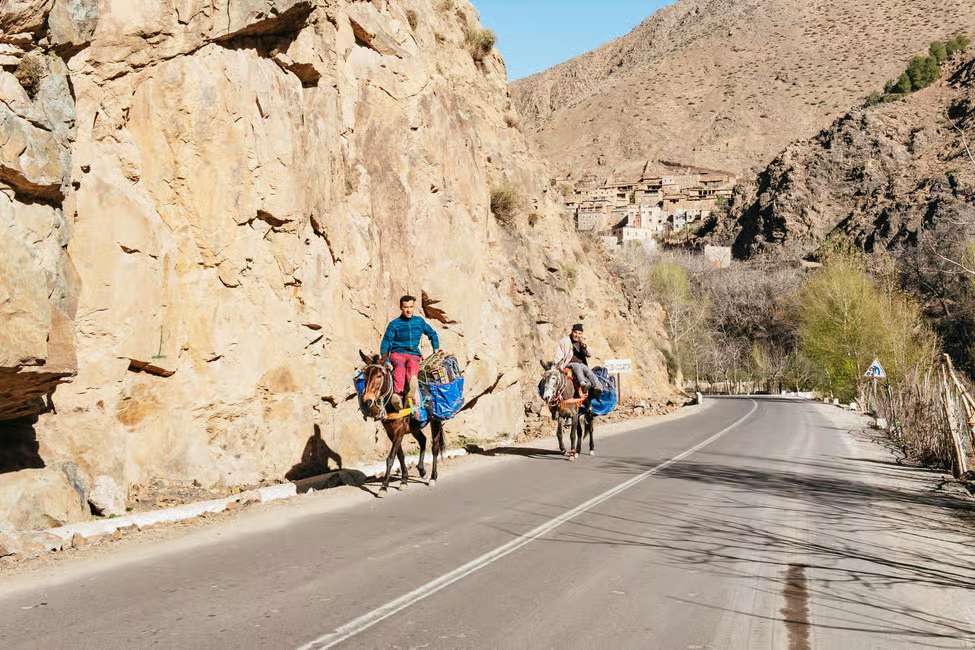

Marrakech has a particular kind of noise mopeds threading through narrow gaps, vendors calling out over each other, the soft thud of footsteps in dusty alleys. Then you leave the city and, almost without noticing the exact moment it happens, the air begins to thin out. The roadside turns from billboards and concrete to open fields, low stone walls, olive trees. The pace changes. Even the sound inside the car shifts: fewer horns, more wind through a cracked window, the steady rhythm of tires on a road that starts to climb.
On the marrakech to imlil route, that quiet is part of the journey. You don’t “arrive” in the mountains so much as you drift into them one bend at a time until the landscape feels less like a backdrop and more like the main character.
Micro-summary: The drive out of Marrakech isn’t just transport it’s a gradual shift in mood, air, and rhythm as the city gives way to the High Atlas foothills.
If you’d rather enjoy the road from Marrakech to Imlil without thinking about timing, transport, or small logistics, a calmly paced Excursion to Imlil Valley lets you focus on the landscape, the villages, and the change in atmosphere not the planning.
What “Marrakech to Imlil” really means
People say “Marrakech to Imlil” like it’s a simple transfer, but it’s more accurate to think of it as a change of world. You’re heading south toward the High Atlas, roughly in the direction of Toubkal country, where villages sit along terraced slopes and the road begins to feel more intimate more local.
In practical terms, you’re traveling about 60–70 km (depending on where you start in Marrakech and how you count the final approach), and the drive usually lands around 1.5 to 2 hours. But the “distance” isn’t the point. What sticks with most people is the sensation of leaving one climate and entering another especially when Marrakech is warm and the mountains are noticeably cooler.
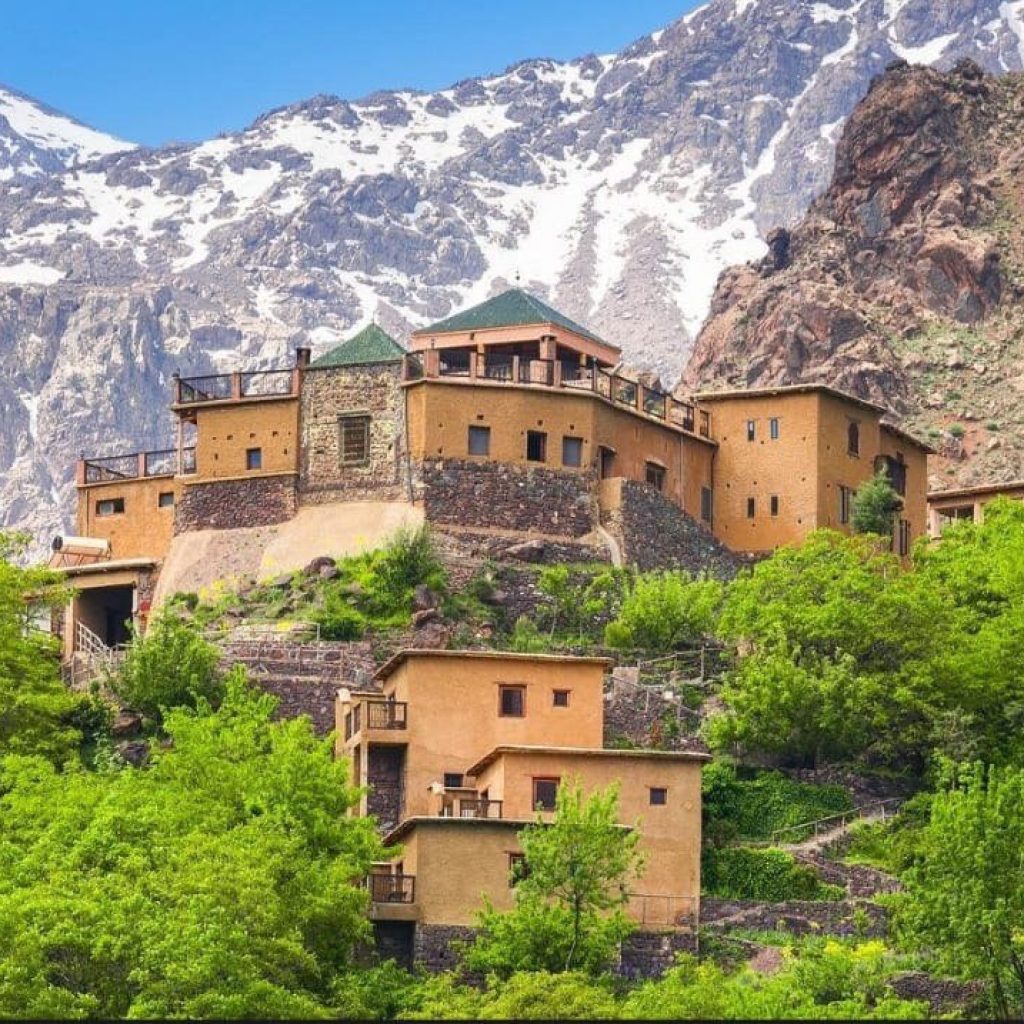
By the time you reach Imlil (often written as Imlil Morocco in maps and blogs), the air can feel sharper, and the light often looks cleaner less hazy, more precise. It’s the kind of place where the road doesn’t end, exactly, but it changes purpose: it stops being a highway and becomes a thread connecting small communities.
Micro-summary: “Marrakech to Imlil” is a short distance with a big shift city heat and motion to mountain air, altitude, and quieter roads.
Ways to get from Marrakech to Imlil
There isn’t one “right” way to do a day trip from Marrakech to Imlil. The best option depends on how much uncertainty you enjoy, how you handle road curves, and whether you want to be in charge of every small decision.
Shared transport
This is the most local-feeling option and sometimes the most unpredictable.
What it’s like:
- Often involves going Marrakech → Asni first, then continuing to Imlil.
- You may wait for seats to fill.
- Timing can be fluid; you’re moving with the day’s rhythm, not a fixed schedule.
Pros
- Usually cheaper.
- Social, grounded, and straightforward once you accept the pacing.
- Good if you’re comfortable asking basic questions and adapting.
Cons
- Less control over departure time and stops.
- Comfort varies (space, heat, luggage).
- Can feel tiring if you’re trying to do Imlil and return the same day without stress.
Private car/driver
This is the calmest “just get there” approach, especially if you value space and control.
Pros
- You choose when to leave and when to return.
- More comfortable for families, small groups, or anyone sensitive to heat/curves.
- Easier if you want short stops for photos or a quick tea without negotiation fatigue.
Cons
- Costs more than shared transport.
- You’ll want to agree clearly on pickup point, return time, and whether stops are included.
Organized excursion
This sits somewhere between convenience and structure. Done well, it doesn’t feel like being herded it feels like someone has quietly removed the friction.
Pros
- Logistics handled (timing, route, basic coordination).
- Useful if you don’t want to spend mental energy on transport details.
- Can be a good fit if you want a well-paced imlil valley day without watching the clock.
Cons
- Less freedom to change your mind mid-day.
- The tone depends entirely on the provider (some are calm; some feel rushed).
Micro-summary: Shared transport is flexible-but-unpredictable, private drivers offer control and comfort, and an organized excursion trades some freedom for ease.
What you see along the way
The first part can feel deceptively ordinary flat stretches, open land, roadside stands. Then the horizon starts to sharpen. The mountains don’t “appear” all at once; they assemble themselves slowly, ridge by ridge.
As you approach Asni, the road begins to hint at what’s coming: more curves, more changes in elevation, more small villages where daily life is happening right beside the asphalt. You’ll see:
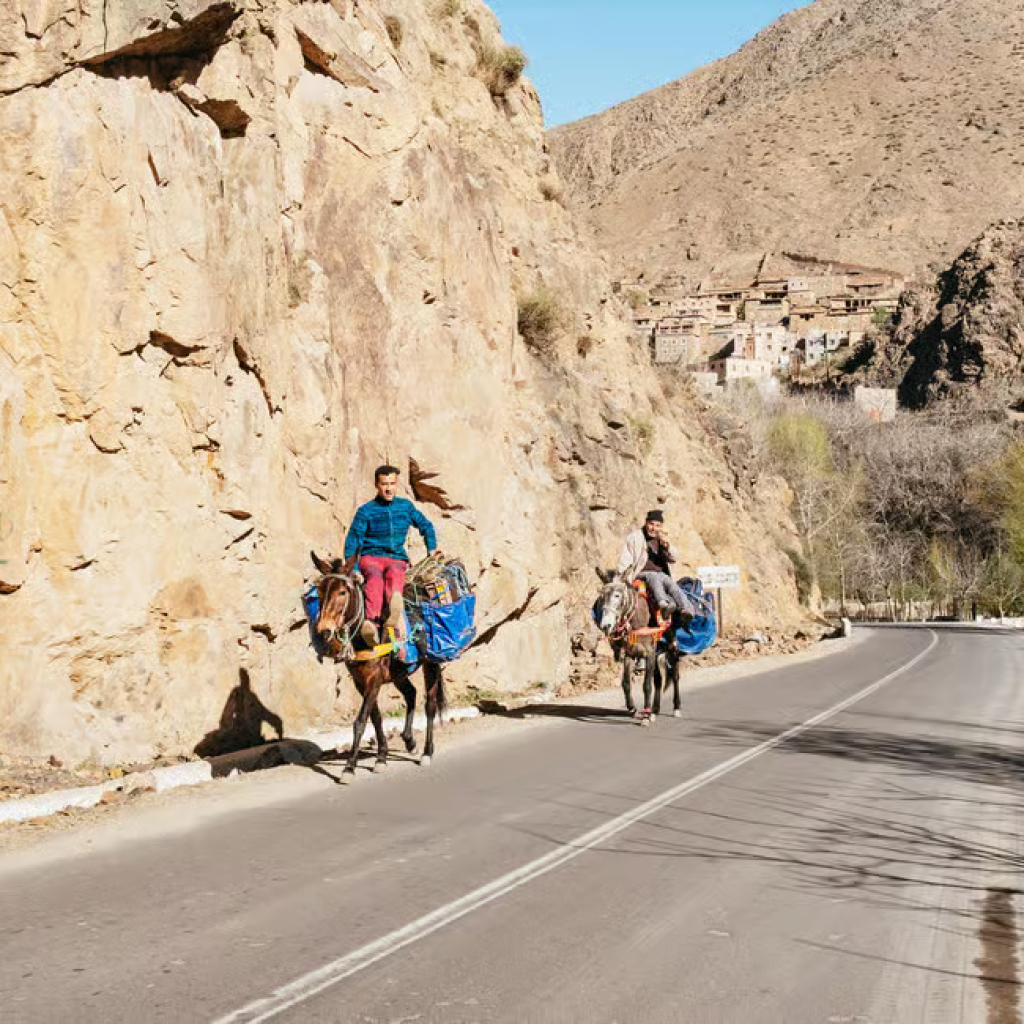
- Donkeys carrying loads in places where cars can’t go.
- Terraced fields that look hand-built because they are.
- Small roadside clusters of shops tea, fruit, basic supplies built for people who live here, not for passing travelers.
The light is often the real surprise. In the later afternoon, the slopes can glow in a way that makes even a simple bend in the road feel cinematic without trying.
Micro-summary: The scenery shifts from open plains to foothills, then to tighter mountain roads with villages, terraces, and clearer light as altitude rises.
Timing, comfort & expectations
A lot of first-timers underestimate how the drive feels, not how long it is. Even if it’s under two hours, mountain roads add a different kind of fatigue especially on the final stretch into Imlil.
A few realistic notes:
- Leaving earlier usually makes the whole day softer. The road feels less rushed, and you arrive with more calm.
- The last part has curves. If you get carsick, plan for it (fresh air, light breakfast, a seat with a stable view).
- Stops happen naturally for photos, tea, or simply because someone needs a moment. That’s normal.
Weather is another quiet factor. Marrakech can be bright and warm while Imlil is cool, windy, or even damp especially outside summer.
Micro-summary: The journey isn’t long, but curves and altitude can make it feel longer; early departures and realistic comfort planning help a lot.
Is doing it independently always better?
Independence sounds romantic until you’re the one calculating return timing, negotiating prices, and wondering whether the ride back will be easy at the hour you want. For some travelers, that’s part of the fun: the small problem-solving, the sense of moving through Morocco on its own terms.
For others, the mental load adds up especially on a day trip from Marrakech where the margin for delays is smaller. It’s not about capability. It’s about what you want to spend your attention on: the road and landscape, or the logistics.
I’ve met plenty of confident travelers who still prefer having the transport quietly handled, simply so they can arrive in Imlil Valley with their head clear.
Micro-summary: Independent travel can feel rewarding, but on a tight day schedule, the extra decisions and uncertainty can become the tiring part.
Best seasons & daily timing for Marrakech to Imlil
This route changes with the calendar, mostly through light and temperature.
- Spring: Clear mornings, fresh air, greener valleys. One of the easiest seasons to enjoy the contrast between Marrakech and Imlil Morocco.
- Summer: Hot in Marrakech; Imlil is often a relief. Midday sun can be intense, so earlier starts feel better.
- Autumn: Warm light, stable weather, comfortable walking conditions.
- Winter: Crisp and dramatic, but colder in Imlil, sometimes with snow higher up. The road is usually fine, but conditions can shift.
Daily timing matters as much as season. Morning departures tend to feel calmer; late returns can feel longer because the mountain curves are more tiring when you’re already full from the day.
Micro-summary: Spring and autumn often feel the most balanced; early departures usually make the route more comfortable in any season.
Practical advice for a smooth journey
A few small choices make a big difference on the marrakech to imlil day.
- Wear shoes you can actually walk in. Even if you don’t “hike,” Imlil’s paths are uneven and stony.
- Bring layers. A light jacket or warm top can matter, even when Marrakech is warm.
- Carry water and a small snack. Not because it’s remote, but because curves + altitude + hunger is a bad mix.
- Plan for the return mentally. The day doesn’t end when you arrive; save a little energy for the drive back.
- Keep your pace gentle. The valley rewards slow observation more than a checklist.
- If you’re sensitive to motion, prepare. Fresh air, minimal screen time in the car, and a seat with a steady view help.
Micro-summary: Comfortable shoes, layers, water, and a slower pace make the route feel easy and keep the return drive from feeling heavy.
Conclusion
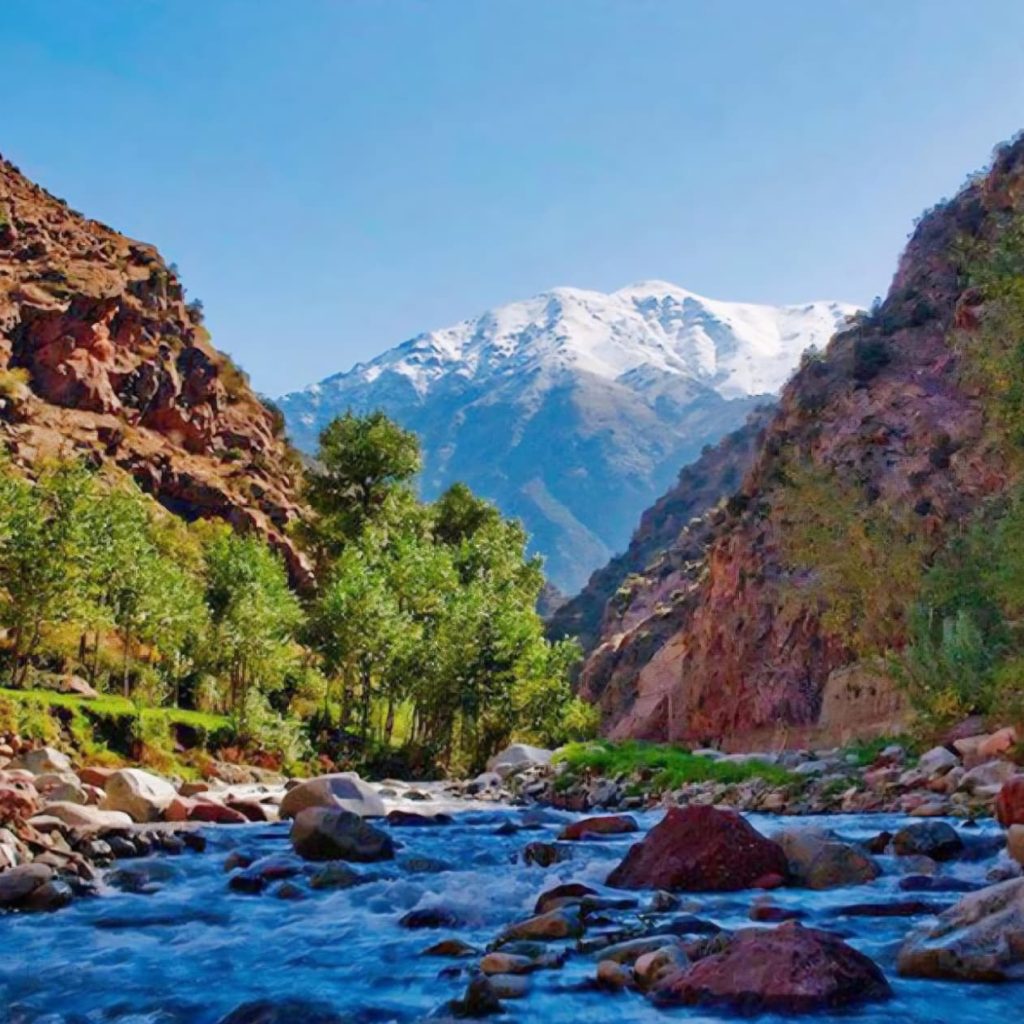
The marrakech to imlil journey is less about reaching a place and more about crossing a threshold. You start in a city that moves fast and arrive somewhere the mountains set the tempo slower, cooler, more spacious. If you treat it as a transition rather than a task, the day feels fuller, even without doing much.
If you’d rather keep the day calm and let the timing and transport run smoothly in the background, an Excursion to Imlil Valley can be a well-paced way to experience the route without carrying every detail yourself.
For travelers who want the Marrakech to Imlil journey to feel smooth, unhurried, and well-shaped from start to finish, an Excursion to Imlil Valley offers a simple way to experience the route and the valley without carrying every detail yourself.
Short FAQ
How long does it take from Marrakech to Imlil?
Most trips take about 1.5 to 2 hours, depending on traffic, stops, and where you start in Marrakech.
Is Marrakech to Imlil doable as a day trip?
Yes. A day trip from Marrakech works well if you leave in the morning and keep your pace relaxed.
Is the road to Imlil difficult?
The road is generally straightforward, but the final section has curves and can feel tiring if you’re prone to motion sickness.
Do I need a guide to visit Imlil Valley?
Not always. Many people walk around the village and nearby paths independently, but guided options can help if you want a deeper valley experience without navigation stress.
What should I pack for the drive and time in Imlil?
Layers, comfortable shoes, water, and sun protection are the basics, temperatures can differ from Marrakech.
What’s the difference between shared transport and a private driver?
Shared transport is cheaper but less predictable; a private driver is more comfortable and gives you control over timing and stops.
Author bio
I’ve traveled the Marrakech-to-Imlil road multiple times across different seasons, usually with a notebook in my bag and no interest in rushing. My work focuses on small details how places sound in the morning, how the light changes on a slope, how daily life continues around a visitor. In the High Atlas, that means writing with respect for local pace and practical reality, not just scenery.
0 Comment